


happy friday everyone,
this week in the house we’ve been meditating on the the massive, underemphasized skill and competitive advantage that comes from mastering pace.
rush is not our portion. the glamorization of hustle is evil and it’s just another way to keep us in bondage and too tired to take what’s ours or make any meaningful progress. burnout is robbing us of our birthright and the grind is a liar.
our obsession with faster is not a new phenomenon. we Americans love a diet. a get rich quick scheme. and convenience at any cost. this urgent energy is built into the foundation of our workplaces that are designed to keep us confused and in constant motion. because they know if we are able to slow down long enough, we’ll realize just how wonderfully wasteful everything really is.
so we gotta be as obnoxious about slowmaxxing as the manosphere is about looksmaxxing.
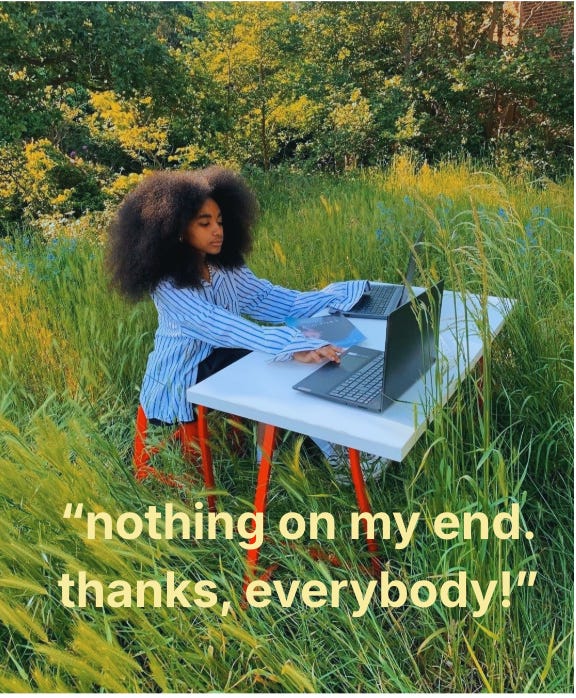
slowmaxxing is the intentional trend that rejects hustle culture by intentionally slowing your pace. instead of rushing through everything, it’s the mindset and daily practice of savoring ordinary moments like drinking coffee, walking without multitasking and bringing our full attention to simple acts. together, these acts aggressively crush chronic cortisol levels to help reboot and restore our collectively nervous systems.
so, how might we start to get into practice of slowmaxxing?
tell the truth about the cost of chaos.
in this week’s essay, Maya shares the true story about her body being so addicted to cortisol and adrenaline that it led her to choosing a chaotic environment instead of a calm one (literally) in a major turning point of her career. everyone struggles in making hard career decisions under pressure or chasing the validation of sexy career opportunities. many of us have gotten it wrong and shared practical ways we’re learning to trust ourselves again by learning how to create a life that honors the beauty of the slow.
when we choose too quickly instead of staying calm, it always turns into chaos.

i grew up 3 older brothers in the Midwest. as kids we never really got to have fancy, bright boxed sugary cereals. when we would go to the grocery store with our parents we would beg them for the latest we had seen in the fun commercials in our favorite cartoons. froot loops. lucky charms. cinnamon toast crunch. cocoa puffs. it was almost always
don’t believe them.
by them, we mean out of touch, greedy tech oligarchs like Marc Andreesen who essentially said that building an interior life is a waste of time and how we should never slow down to reflect in an interview with Ezra Klein (thanks jp). they are financially incentivized to force AI and the stronger, faster, quicker narrative down our throats. and although they may speak with authority, it’s not truth. don’t believe them.
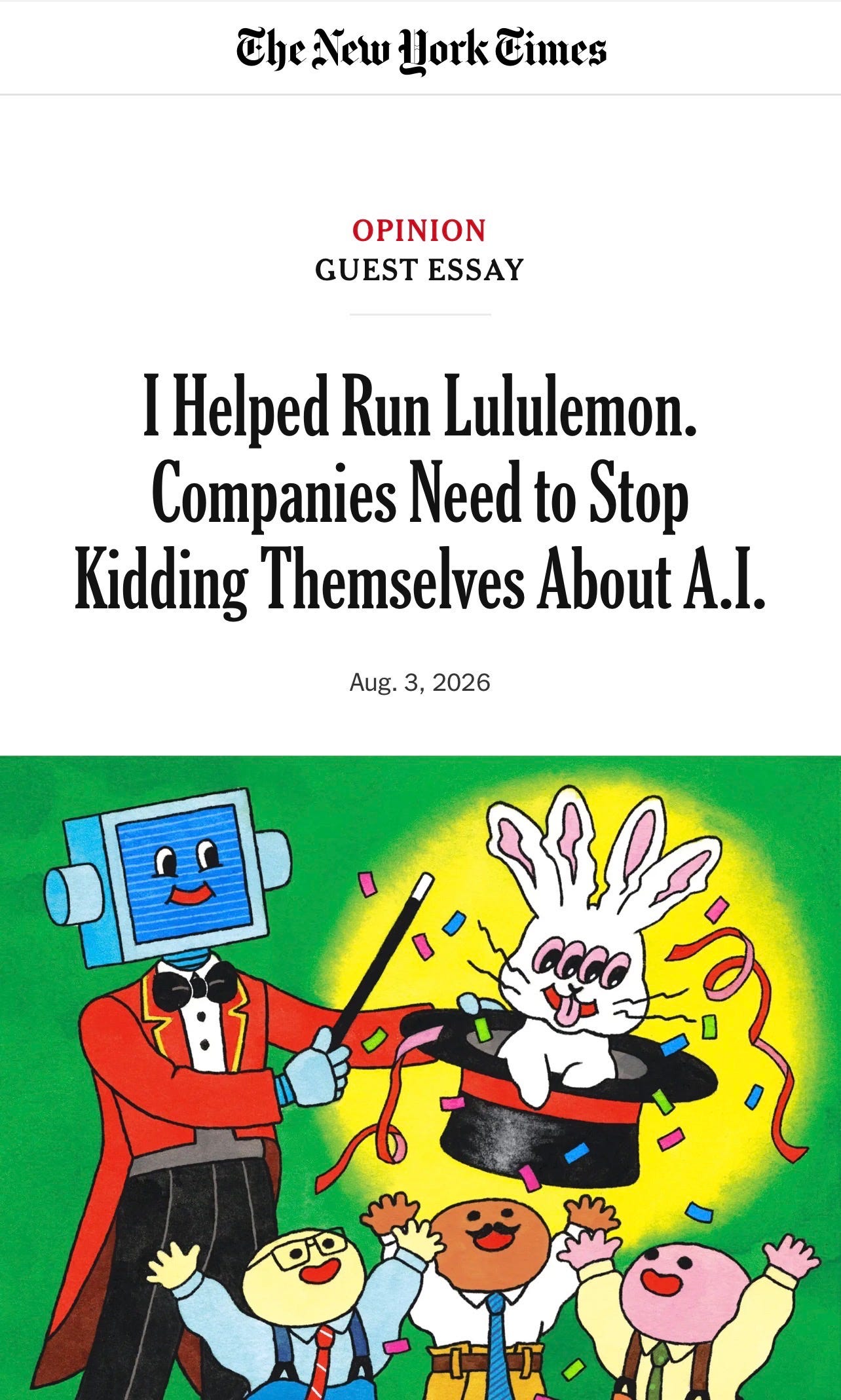
many are coming to the realization of how the culture of quick is a dangerous illusion that’s not producing any real fruit. this week in the NYT, Julie Averill, former Chief Information Officer of Lululemon, called the AI revolution a hot mess and a show. Substack and Linkedin have admitted that the rush to make content using AI is ruining their platforms and recently taken action against it.
understand the why behind the trend.
Jasmine Bina from the Concept Bureau is one of our favorites to read here on substack. she wrote a great piece about how we’re being forced back into our bodies. she illuminates that this deeper somatic and slowmaxxing movement beneath the modern wellness industry is a necessary and deeper desire to reconnect to ourselves. she successfully argues that when everything we know becomes a lie and trust is drastically collapsing everywhere, the body is the last real thing we can trust.

breathe, baby.
if you exist in a modern work environment then you’re probably shallow breathing most of the time which triggers more stress responses. you may even be clenching your jaw, have your tongue pressed against the top of your mouth or hunching your shoulders as you’re reading this. the world wants you to believe that you need all of these expensive supplements, apps or gadgets to calm down when in reality, God built the cheat code directly into your ribcage to calm your vagus nervous system. which is the information highway to your entire physiology, instantly signaling your brain to switch from survival mode to absolute calm.
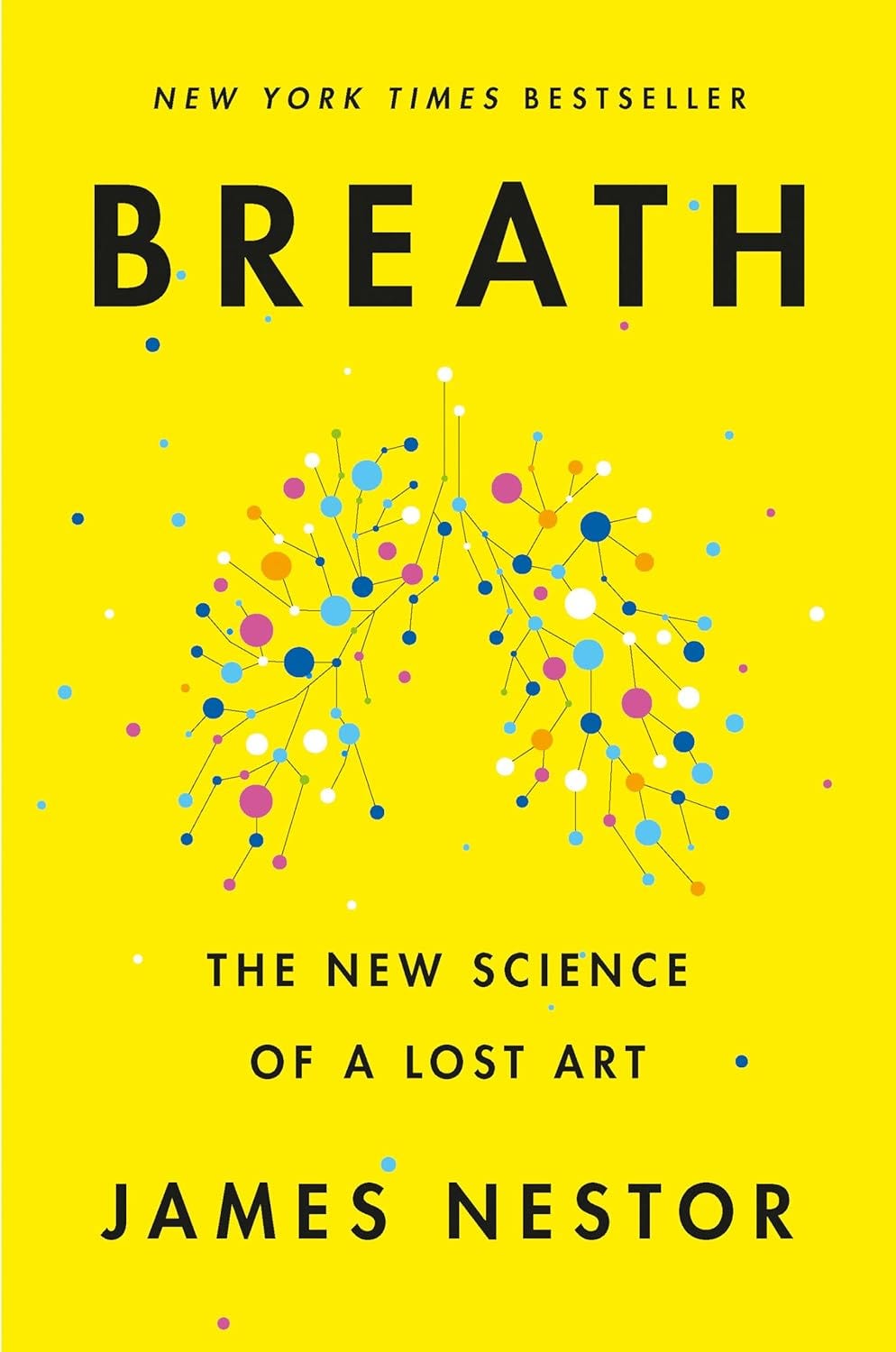
grab Breath: The New Science of a Lost Art by James Nestor that shows you 10 different ways to breathe and that the most powerful human hardware is something you already own.
invest in hard data.
Jen Randle wrote on substack about how a saturday lunch with friends and a few folks she wasn’t as fond of seemed harmless at first. the stress her body was under would have gone unnoticed if she hadn’t checked her oura ring and noticed an elevated heart rate and suppressed variability – a pattern you’d expect during a hard meeting or deadline sprint.

investing in hardware like oura rings or cortisol tests from everlywell forces you to confront your baseline stress data so you can stop wondering how bad it is and start to build a practice and plan to improve (this is not an ad, btw).
use substack notes to practice rebuilding trust.
the goal is for there to be total congruence between your internal boundaries and your external speech. if your gut says no, your mouth must say no. over-explaining, over-performing, and saying yes to appease others introduces chaos into your life. when we write, we are not just recording our thoughts, we are actively organizing chaos. which leads to stress reduction through cognitive offloading. it specifically helps eliminate the mental loop cycling of thinking about things over and over again.
thankfully substack is not like every other place on the Internet. this is genuinely a community who’s becoming out loud (at least for now). practice working out a decision, sharing something you think that might be controversial, weird, or interesting. the goal is to get in practice of writing about what’s true to you so the next time you’re faced with having to make a decision, you know what truth feels like in your body.
operate in low-power mode.
if you’re already running on empty, adopt a strict 80% low-power mode protocol. stop performing at your usual people-pleasing 110%. don’t volunteer to take additional tasks, stop fixing other people’s problems and give up trying to save the day. you must prioritize radical energy conservation.
this helps creates the capacity to be around your kind of people and do the things that deepen the truth of who you are which actually energizes you. whether it’s a hike club, making homemade cards, being in your garden or working on puzzles.
for example, we’re doing a slow August where we turn down the volume on external meetings and conversations. you can borrow our language if you want when people reach out asking for your time:
hello! thank you for reaching out. i’m in what i call a slow august, intentional time i take each year to rest and restore. that means no additional external calls or meetings, and no work outside our core expression of [writing and engaging with our community online].
i’m holding this one firmly, even for people i’d love to say yes to. the whole thing falls apart the moment i start making exceptions. that said, if there’s something i can answer in a note, send it over and i’ll get to it at a slower pace. anything that needs a real conversation, let’s find time in september.
wishing you some slowness of your own this month.
some people will honor your boundaries. other people might be annoyed. either way you get data round those who support your regulation and those who intended to extract and drain you.
adopt a rest ethic.
isn’t it crazy how we exist in a modern workplace that is designed to prevent rest but elite athletes treat recovery as a non-negotiable strategy? Kevin is the king of rest and has taught so many the power of a rest ethic, where we work from a place of rest and don’t work to earn rest.
we promise we’re not that obsessed with LeBron, but he is one of our muses on rest. in Starting 5 on Netflix, he talks about how much he invests in his rest and his commitment to naps. it’s not lost on us that one of the greatest living athletes of our time, with one of the longest-running careers in modern sports history, openly cites an obsession with rest and recovery as the definitive secret to his unmatched longevity.
…and don’t forget the tortoise wins the race.
sending u so much love,
m & k
p.s. what are your must-have and go-to slowmaxxing practices?
cheers to a slow august!
this is such an amazing edition (and not just because of the shoutout … THANK YOU for the mention) … but what i truly love is that so often folks talk about rest, naps, slowing down, being anti-hustle without helping to build a bridge between here and there. you both have started to do that! so, thank you, thank you, thank you.