


we felt like this week’s essay was some of our best work on Follow the Leader to date. we had so much fun connecting the dots between LeBron’s most recent move to Philly, an emotional 1:1 between Maya and Bozoma and how it all reinforces that these workplaces will never really see or honor us in the way we hoped…so we have to move accordingly. seeing responses like this changed my brain chemistry (thank u Kayla) and this rewired the perception of my own career (heyyy Tenille) is our love language.
we’re glad you’re enjoying it with the intent it was written.
"Lebron James is the Bozoma Saint John of the NBA."

last Friday afternoon around 3:37p, Kevin Stuckey and i had just wrapped our first official Substack review meeting. how’d we do? who showed up? what are we learning? and based on that, what do we need to be in practice of next week? we had finally closed our laptops, pleased with our progress and witnessing the micro and macro impact of being in expression of our t…
must-read: Life is In the Transitions
we shouted out our boy Bruce Feiler in this week’s essay and he is one of our favorite non-fiction writers. he really doesn’t get the flowers he deserves, but his book Life is in the Transitions is a must-read for all of us in this time. someone gave it to Maya during peak Covid when there was so much chaos in her life personally. it gave her clarity, made her feel less alone, empowered and equipped her to help find her way out.
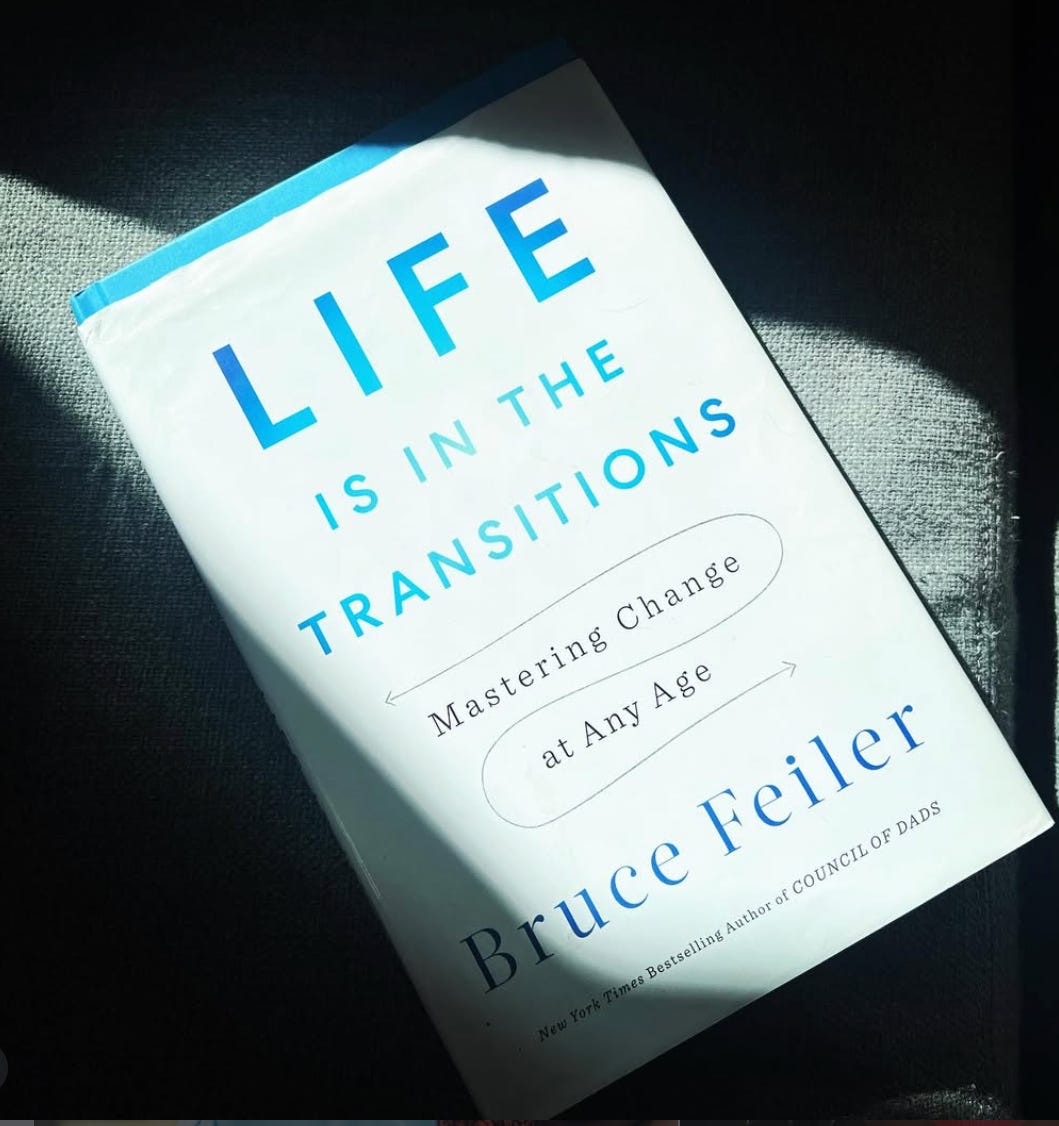
if you are navigating any kind of transition — job change, divorce, a move, marriage, becoming a parent, navigating loss + grief… pretty much everything, this is an ESSENTIAL book. here’s what you’ll learn:
context on why transitions are so messy and uncomfortable and how long they last + why
historical context that illuminates why we are dealing with so many more transitions than generations past
the sequence of a transition so you can find your bearings in it
great guidance on how to be super intentional in the transition
relatable and relevant stories to underscore each principle
mastering transitions is the most essential skill for our generation because we literally are in perpetual change. it’s a practical, fast read that you can reference over and over.
future of work: either become a creator-led brand or work for one.
in a world where every piece of information is available but the traditional system of work is fundamentally broken, the new economy belongs to those who build their lives and businesses on the truth of their stories. our real, lived experiences and perspectives are our most valuable assets, our original ip, our ultimate point of connection and the only reason people will care.
a few weeks ago, Starbucks just made an epic move to empower and pay their baristas to grab the mic on behalf of the company. in this first-of-its-kind deal with TikTok, the company will select certain employees and send them content ideas to turn into TikToks and earn money.
last week, Gap Inc. just announced that they too are creating a creator program for employees that gives them a way to become influencers, earning commission and product while sharing what they love and bringing the Gap brand to life through authentic storytelling.
here on Substack, Kevin discovered this GenZ phenom book publicist,
Abigail Monti and her stack Unsolicited Manuscript. she writes her observations from inside the publishing industry and her company Penguin Random House actually supports her becoming a known creator because they get what we get… if we fall in love with Abigail’s story, we’re more likely to buy their books and support their authors.

the truth will set us free.
the future belongs to those who are willing to share both the torturous and triumphant journey of their stories out loud.
this week we were inspired by Jarrod at Craft & Capital.
Jarrod is an attorney and tech policy advisor who is becoming a leading creator in the business of high fashion. this week, he relaunched his substack and shared his emotional story about being laid off by Amazon and how hard the shift has been as a husband, father and the truth about building outside the w-2 system. we loved his declaration at the end, I will be successful, but I will definitely make mistakes along the way. But I’m done building in silence and only showing my wins. That’s not real life. That’s reel life.

we look forward to hearing you share more on the necessary tradeoffs of becoming a craftsman in this longer format, Jarrod.
permission to… not have a plan.
we love talking to and hearing from people who create safe relational environments for people to tell the truth of their stories. and last week, we caught up with one of our readers who’s a therapist (when ya’ll reach out, we respond btw). we asked her, what are you hearing from your clients in broad strokes. she answered, mass disillusionment from what they thought their lives were going to look like.
so when we saw, Myliek’s article, Permission to Not Have a Plan, we knew we had to share. she succinctly sums up the existential feeling of those who are making the transition from corporate athlete to creativeprenuer: i don’t know what’s next.
she affirms that the answers we’re so desperately wanting come from allowing time and space to do its work. she writes, so much in your life is going to change, and the goal is not to get rid of uncertainty. It’s learning not to confuse uncertainty with incompetence. You don’t know yet, and for now, let that be enough.
thank you for the permission, Myliek.

the latest on the stack: is your writing 100% human?
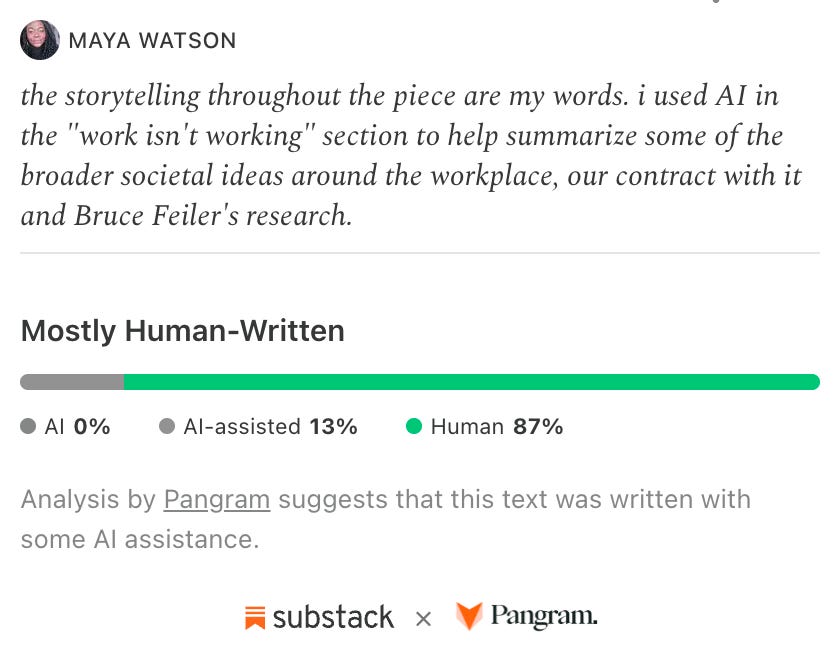
the Substack streets are at war over the new collaboration with Panagram and their feature that lets readers scan text over 100 words to determine if there is any AI assistance in the writing. some think it’s a great addition to keep Substack a more human place on the internet and not let it become ai drenched like LinkedIn. others believe it’s a witchhunt, an inaccurate tool that’s going to make great writers question themselves. Aurora James wrote about this in her latest, Did I write this?, where she admitted to questioning [her] own sanity, and the validity of [her] words.
here’s our take on this: stop worrying about what people think and start focusing on your intent. this isn’t about the tool. you can disable it and it not be a thing.
this is really about the trust you’re building between you and your readers. you can obsess about what people might think or you can focus on how to cultivate a transparent container where you reveal and are honest about your intent with your writing.
if you use ai to write, tell them and explain why. if you are committed to writing 100% human, let them know why that matters to you and your work. if you decide to turn off the tool, reveal your thinking behind it. ultimately, your readers just want to know why you’re doing what you’re doing. this is how trust is built over time. and trust is your most valuable currency, not a Panagram scan.
for example, in this week’s article, we were honest that we used ai to help organize the thoughts in the last section in how i did this, because it’s the truth of how we got there.
you ask, we answer.
Lauren W. from South Carolina asked, I’m leaning into my path as a documentarian in South Carolina and really designing what this looks like for me--with intention this time, not in a reactive way like before. Your writing has helped me see that everyone isn’t going to understand my vision because I have to carve it out first--and even then it’s only for those who are assigned to it. Now that I have overwhelming evidence I’m on the right path, my question is how do I really talk to my audience?
before you start thinking about how to talk to your audience, our first question is, do you know the pain points of who you’re meant to serve and how your work is designed to help bring restoration in their lives? we often see people jump into content without having a clear understanding of this. a great way to approach this is to examine your own life and interrogate your own pain first, or talk with someone who’s been impacted by your work to get to a deeper understanding. you could ask yourself, what’s frustrating me right now and why does it bother me so much? or ask someone you’ve impacted, without using words from my actual job, how would you say i’ve helped you?
we believe that our pain used productively is the pathway to our greatest purpose. once you are clear on that, then start writing to that person, singularly. when we write here on FTL, we think about one person we know in real life and we only write to them. when you write to an audience, you’re not really writing to anyone. but when you write to one person, you’ll end up writing to many.
if you (or anyone) is looking for help on how to start thinking about your work, your story, who it’s here to serve and the pain they may be experiencing, book a session with us. we’d love to serve you.
sending u so much love,
m & k
p.s. we are looking for a kind, people-first, innovative, creative genius to help us distribute Follow the Leader content across platforms.
someone who loves storytelling, is a visionary creative producer and executor who can translate an idea into many formats. someone who knows the pain of work and is on the courageous journey to becoming their own best work and wants to be a part of our mission to change the culture of work, one visionary creator at a time.
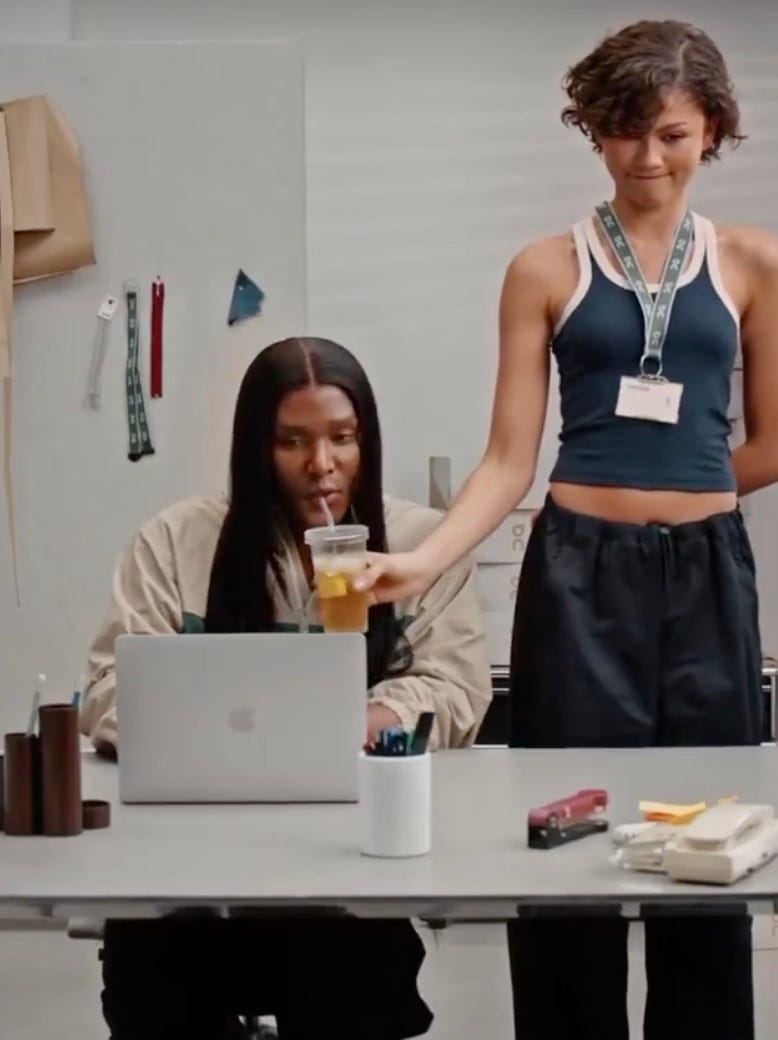
essentially, you are like the Law Roach of social content development + distro.
if that’s you or someone you know, email us at maya@ourbestwork.co or kevin@ourbestwork.co. we want to hear your story and see evidence of you in expression.
You know what this feels like?! Like, y'all made a paper airplane and flew it from your mountain to mine. In the paper airplane is a note that says: "Those abstract thoughts you have? Yeah read Bruce Feiler. You know how you love Gen Z? Check out Abigail Monti because I think this might reflect the thoughts you've been having since your late 30s." And the pain points???? I already started writing a piece on a specific pain point. Started 2 days ago!!! And I bookmarked your Bestwork hyperlink. Kevin and Maya: I've been to my industry meetups. I've been to a Cannes and a Shiny Sisterhood Fest--physically LOL'd at that one! I've been on the Zooms. It gets frustrating hearing the same thing: "Yeah...we don't know...but we know how you feel, you're not alone!" FTL is the only thing I've personally come across that truly meets the moment our society is in, in a way that resonates with my challenges. Y'all have the best day. If you'll excuse me, I gotta go pick up Bruce Feiler's book. Take care!
Thanks for sharing!