


should we facetime her? i said to Kevin after we devoured the first four episodes of Netflix’s A Different World sequel.
we were sitting in the dark red theater room, completely in awe and gushing over every detail. the storyline. the references. the music. the hair. the clothes. the pacing. we could feel the intentionality emanating through the screen.
the sheer level of detail they put into this is insane, Kevin remarked.
as the facetime ring chimed into the empty room, i asked, what are people saying on Threads?
Threads is the ultimate, unapologetic court of public opinion, governed exclusively by Black culture. it can be a brutal place for content. but as Kevin scrolled, his face lit up. my timeline is completely eating it up, he said, surprised and delighted. i’m only seeing great things.
Jasmyn didn’t pick up, so i fired off a text instead: bravo, Jas! so, so, so well done.
we walked out of the screening room and into the bright morning light of the kitchen to start breakfast. it was still early on a Saturday, but the anticipation to watch the show had been building for months.

our friend, former coworker, and—for me—former employee was now a powerhouse Netflix content executive. she had just released her most daunting project to date: reviving A Different World, a crown jewel in the Black television archives. working alongside the legendary Debbie Allen and showrunner Felicia Pride, Jasmyn had taken a massive risk. in the streaming era, it takes years to lovingly develop a series, but only a few seconds of viral critique to kill it.
because we’ve walked alongside Jasmyn since her early Netflix days in 2017, we were fiercely rooting for it to succeed. not only was it a triumph, it was a certified hit. in less than a week, the series pulled off the ultimate streaming miracle: a Season 2 renewal in a landscape where almost everything gets canceled.
laying on the couch in our pajamas, coffee mugs in hand, we had an absolute post-game debrief about what we’d just witnessed, completely beaming with pride.
man, she killed it, Kevin said. she did it again. she’s just a hitmaker. taking on a legacy title like that, with audiences as brutal as they are today? it’s a spectacular feat.
we’ve both borne witness to her genius for years. we saw it first when she was building Strong Black Lead, and later when she made an unprecedented leap from Netflix’s marketing and social teams straight into the white tower in the sky—the actual content team. it was a corporate crossover virtually unheard of in Netflix history.
yeah, but she’s always been entirely clear about who she is and what she’s here to do, I replied. she knows her voice. i remember when we first interviewed her years ago; she had a literal checklist of things she was going to accomplish. right at the top of that list was making comedies.
Kevin smiled, tossing a glance over his coffee mug. well, look at it this way—she’s actually been making comedies this entire time. it just started with six-second gifs at GIPHY. now, she’s just doing it in long-form.
it was October 2017, and i was sitting in a window seat on a flight from Los Angeles to Portland. a dear friend had asked me to give a talk at the Adidas Black ERG (employee resource group). i turned it into a day trip to fit my chaotic schedule, eager to see the Adidas headquarters, make good on the favor, and hopefully score a couple of hard-to-find pairs of Yeezys that were popular at the time.
looking out at the blue skies and an infinite floor of puffy clouds, i was grateful for the rare space to think. i was nearly six months into my own role at Netflix, and it felt like drinking from a fire hose. as I finally took a minute to breathe, the mandate became clear. i needed to make one of my first key hires to prove out a brand-new approach to marketing and storytelling. the company was scaling rapidly, growing its slate of original content at an unprecedented pace. when i started, Netflix produced maybe 20 new originals a year; that number was projected to balloon to 1,500 titles annually within four years.
after embedding with our content, research, data science, consumer insights, product, and leadership teams, we developed a strategy that had never been executed in entertainment. we were going to build an internal editorial function— Condé Nast meets BuzzFeed built for social—and create distinct audience verticals to support the business.
we decided to start with black culture and our vertical Strong Black Lead. our data showed that while Netflix actually hosted more Black titles and talent than the rest of Hollywood combined, Black audiences didn’t view the platform as their cultural home. we needed to build a space that changed that perception—a place to find best-in-class representations of their stories. that was pretty much all we knew. we knew we couldn’t be purely editorial, nor could we be aggressively brand-heavy. we had to live somewhere in the middle, where the storytelling was powerful enough to stand on its own, yet subtly and seamlessly tied back to Netflix.
our recruiting teams began building a pipeline of potential candidates, and i started taking introductory calls. nobody moved me. none of them felt like the visionary this effort demanded. i was looking for a rare hybrid: someone who could act as equal parts editor-in-chief, creative director, and cultural strategist. and most importantly, someone who was obsessed with tv and film. it was a massive, almost unfair ask. we needed someone to invent a completely new model of entertainment storytelling from scratch and have the confidence and conviction to make me believe they could actually pull it off.
before boarding, i had grabbed the latest copy of Fast Company—my favorite magazine at the time and a staple for my travels. somewhere over the clouds, as I flipped through pages covering the intersection of tech and media, a photo caught my eye. it was of Jasmyn Lawson. at the time, she was GIPHY’s Culture Editor. the profile highlighted her work driving original content and curation. she explained that she saw a massive, ignored opportunity to put Black faces, voices, and humor at the forefront of digital expression. because no one else was doing it, she just took it upon herself. GIPHY ended up creating the Culture Editor role just for her, where she was essentially clipping six-second Black stories and shaping the internet’s cultural vocabulary.


my eyes lit up as a wave of gut confirmation hit me: this is our girl. she looked cool, she looked fun, and she was obviously brilliant. i took a photo of her page in the magazine and fired it off to our recruiting team. they were the CIA of talent—if you existed, they could find you. when they finally tracked her down, we discovered a fascinating detail: Netflix had already reached out to her twice for traditional creative marketing roles, and she had turned them down both times. in an era where Netflix offered legendary compensation packages to new hires, saying no twice spoke volumes about her clarity and self-worth. we found one of her tweets, had the main Netflix account publicly engage with it, and then slipped into her DMs with a simple message: someone wants to meet you.
when we finally got on the phone, the conversation just flowed. it didn’t feel like an interview; it felt like catching up with one of my homegirls. Jasmyn was hilarious—the kind of funny where she isn’t even trying to be, but completely knows she is. we were laughing hysterically as she walked me through her work story. when she got to GIPHY, she explained how she had noticed GIFs becoming the new universal language, yet no one was clipping the most iconic moments in Black television and culture. she walked me through one of her very first viral clips: Issa Rae at the Emmys saying, i’m rooting for everyone Black. it was a moment i used constantly; i had even bought a sweatshirt with that exact phrase. Jasmyn hadn’t waited for permission. she just started finding moments she loved and wanted to share with her friends. and of course it worked, and her vision changed the trajectory of GIPHY and they built a role and team around her. it was brilliant.
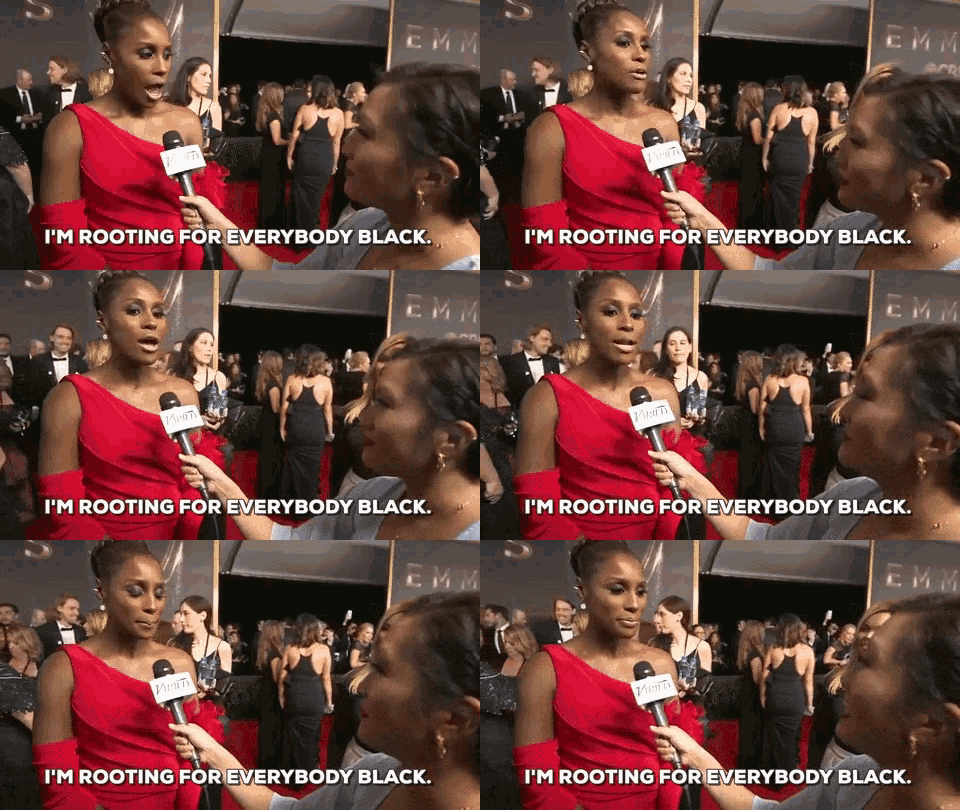
the deeper we got into her work, her clarity was striking. i’m here to make comedies, she told me. to make people laugh and bring us together through content. she explained that as a kid, she watched an inordinate amount of television. but while most parents would have restricted that screen time, her mother, Patrice, recognized something deeper at play. this wasn’t passive consumption; Jasmyn was studying the craft. it never slowed her down academically, either. a straight-A, star student, Jasmyn eventually took her talents to Spelman College before breaking into the entertainment industry almost immediately after graduation.
i had an overwhelming feeling that she knew exactly where she was going. i realized that if i gave her the right context, the proper resources, and unwavering support, i could simply follow her lead and together, we could build something extraordinary.
after a grueling gauntlet of eight interviews across multiple departments, the feedback on Jasmyn was mixed. some flagged a lack of experience. others argued we needed someone with a track record beyond tweets and GIFs. but the ultimate decision rested with me, and I completely disagreed with them.
my conviction was solidified during one of our final conversations. we were discussing her vision for the content she wanted to create, and she brought up The Crown—Netflix’s flagship drama about the British royal family. it was one of her favorite shows. she explained that on Sunday nights, her ritual was to draw a bath and do her full, hours-long wash day routine while watching the series.
that would be the first video I’d make, she told me. she wanted to show exactly how Netflix inherently fit into the intimate, real lives of Black women.
it was the beautiful simplicity of making something that reflected the absolute truth of her life. she wasn’t trying to engineer content that a generic audience might love; she was making things she loved, rooted in her own lived experience. that single concept didn’t just reimagine what we could build for Strong Black Lead—it redefined the boundary of what was possible for all of Netflix’s brand and editorial work.
from that moment on, it became our ultimate creative filter: is this the truth of your story? does this represent your real life experience? if not, it’s not yours to make.
that video inspired by The Crown became our first massive breakthrough. from there, Jasmyn didn’t just manage Strong Black Lead; she built it into the definitive cultural blueprint and one of the most coveted platforms on the internet for Black talent to be featured and celebrated. she created iconic series like Strong Black Legends, Hey Queen and the popular podcast, Okay, Now Listen.
but her influence stretched far beyond social media. recognizing a gaping demand, she collaborated with the acquisitions team to license the legendary UPN library of Black sitcoms. The Parkers was one of her favorite shows growing up that reminded her of her relationship with her mom. she said, i wanted to rewatch it, saw it was available and asked if we could buy it and the content team said yes. that acquisition, that included Moesha and Girlfriends, was a pioneering masterclass in content acquisition, proving once and for all what happens when you build for the audience first and curate the things you love.


after a few years with us, Jasmyn’s trajectory shifted again. she had masterfully scaled her work from six-second loops at GIPHY to Instagram- and YouTube-length original series. one day, while presenting the Strong Black Lead strategy to cross functional teams, history repeated itself. just like that afternoon over the clouds when i stumbled on her photo in Fast Company, Jasmyn was discovered all over again. this time, an exec on the content team took notice. she needs to be making shows for Netflix, they realized.
with that, she made an unprecedented leap from marketing and social straight into series development. suddenly, she was championing and shepherding full-length scripted comedies, managing massive titles like Michelle Buteau’s Survival of the Thickest, The Vince Staples Show, and Mindy Kaling’s Never Have I Ever.
despite the massive scale of her new domain, her creative compass and process never drifted. she still filters every project through the exact same thesis she pitched to me all those years ago: making comedies rooted in the absolute truth of her lived experience.
back on our couch, Kevin set his coffee mug down as Threads continued to overflow with praise for her latest masterpiece. the entire show just felt so unmistakably like Jasmyn. you could see her essence all over it, clearly influenced by her own days walking the yard at Spelman College and navigating the AUC. every single thing she loves is baked right into the screen: the specific nuance and perils of modern dating, the meticulous casting of fine men, the cultural shorthand. it was handled with the exact same hyper-specific care, love, and intention as when she was clipping six-second GIFs at GIPHY.
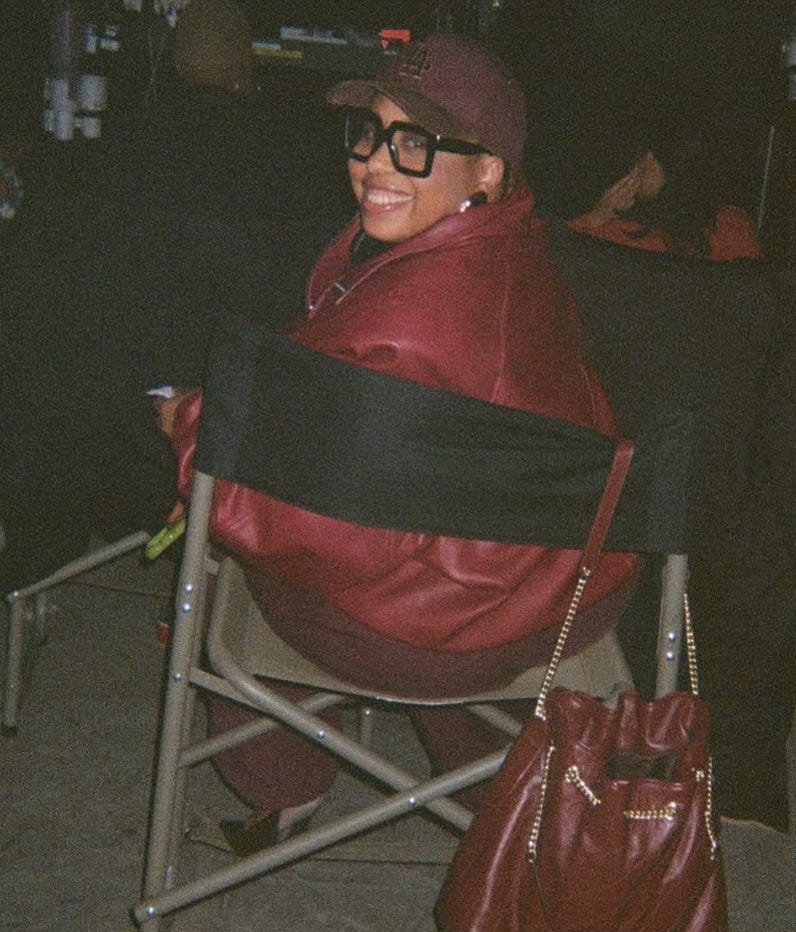
as her practice deepens, her stage just gets bigger without her ever having to chase the spotlight. she showed us that the real masterpiece isn’t the hit show or the rapid Season 2 renewal—it’s her unwavering process. she gave us a blueprint for how to build a career on your own terms, showing everyone that when you anchor yourself in the absolute truth of who you are, the world will always follow your lead.
go Jas, go.
sending u so much love,
m
turning down netflix twice?! the highest expression of authority to me is when someone can say: “that’s not my work!” so excited for who Jas is becoming!
I love watching her rise… also wondering how we’ve never crossed paths! What a joy to witness