


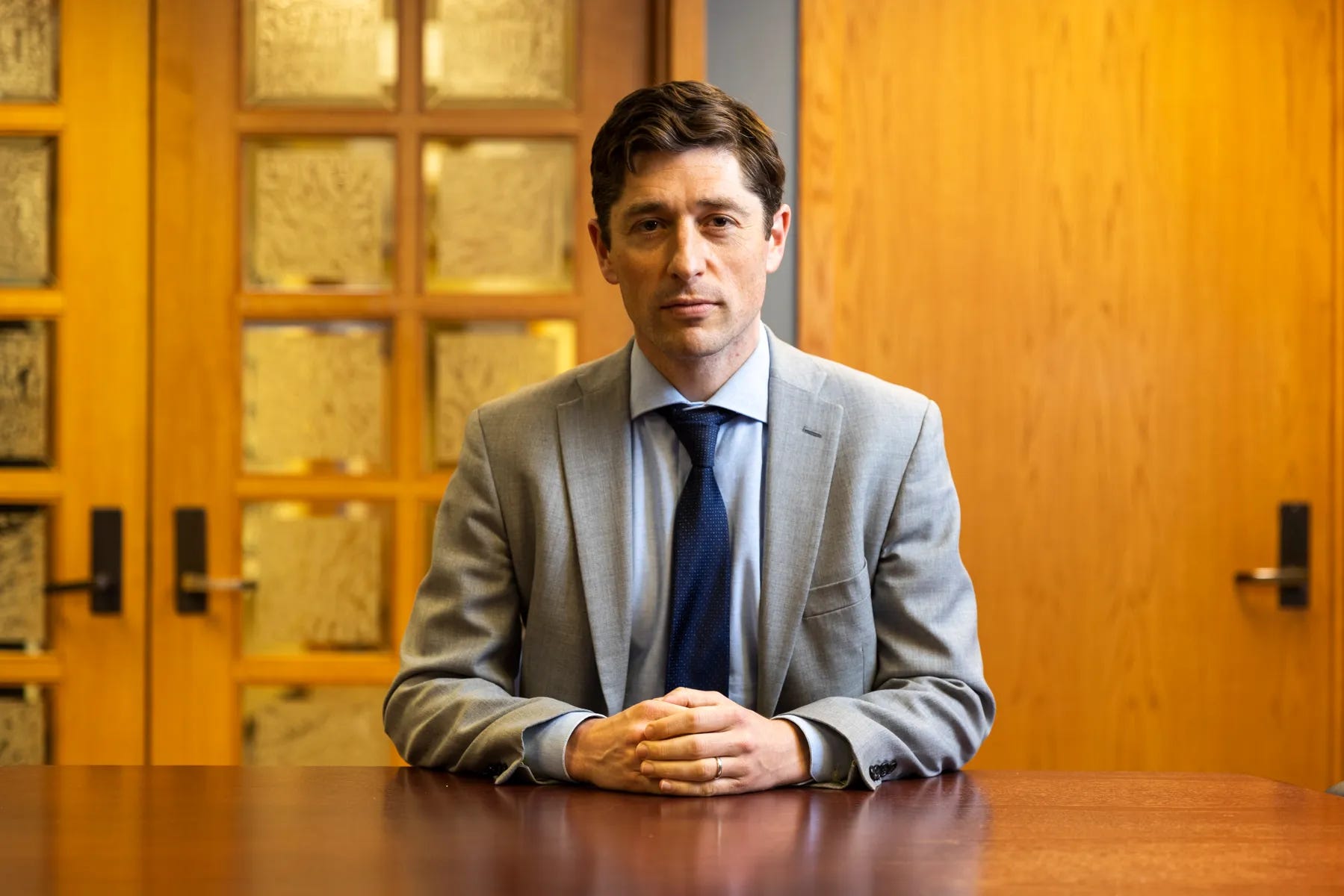
Jacob Frey is calling bullshit.
On Wednesday, a woman was fatally shot by an ICE agent in Minneapolis. The Department of Homeland Security claims she attempted to “weaponize her vehicle” to hit law enforcement and labeled her actions “domestic terrorism.” DHS officials are calling it self-defense.
Minneapolis Mayor Jacob Frey watched the footage himself and had a different response:
“They are already trying to spin this as an action of self-defense. Having seen the film myself, I want to tell everybody directly: that is bullshit.”
Whether you see this as murder or self-defense, the result is the same: someone is dead. And when there’s a problem, the leader is the one who holds themselves accountable to being an answer. That’s what I’m seeing in Mayor Frey’s response.
As mayor—an elected official—public safety is one of his core responsibilities. This includes oversight of the police department and emergency response services, appointing leaders, and leading during crisis. If anybody has the right to call out an external entity operating in his city, it’s him. While ICE reports to the federal government, it also has a responsibility to collaborate with city leadership to preserve order and safety.
Frey made his position clear: “We do not want you here. Your stated reason for being in this city is to create some kind of safety, and you are doing exactly the opposite. People are being hurt. Families are being ripped apart….Now somebody is dead. That’s on you. And it’s also on you to leave. It’s on you to make sure that further damage, further loss of life and injury is not done. We’re going to be working towards justice as quickly as we possibly can, and justice is what we’ve all gotta get…“
If anyone is offended by this statement, you don’t understand his dilemma. This administration has presented itself as wanting to shrink government oversight—but its actions have suppressed power, particularly from local leaders who challenge federal overreach. To hear a leader call it out and exercise his authority is necessary.
You may be unsure what this has to do with your ability to exercise authority, but let me break it down. In my work, I’ve always had two jobs: the job I was responsible for—communications, marketing—and the job I was voted into: people leader. Not always by title, but often by influence. I was one of the people who cared about the impact that decisions, indecision, and lack of clarity had on others. I did the cleanup when a bully or anxious boss walked into the room like a tornado, wanting results but lacking the inner clarity and diplomacy to produce them. These leaders, consciously or unconsciously, undermine confidence and instill fear. At worst, they use intimidation tactics that leave teams feeling small and voices suppressed. This is the same kind of leader who puts you in a position, then undermines your authority to do the job. So this isn’t just about Jacob. It’s about us.
One of the biggest casualties when people don’t exercise their authority: the well-meaning, caring truth-tellers who stay silent out of fear. They think it will get better. That the behavior will get corrected. That the truth will surface eventually. But it won’t—not until somebody decides to say something. I remember working with a leader who caused division by weaponizing feedback we hadn’t given each other. One day, I called her out in front of everyone so the behavior would stop.
You can’t tolerate corrupt influence in your house. In your domain. On your team. It won’t get better on its own. It will only worsen if unchecked. Because what we don’t disrupt, we authorize, and we give it permission to become the culture. Once it becomes culture, it suppresses everyone’s authority. Truth-tellers stay silent. People with clarity doubt themselves. Those who care most end up doing cleanup, burning out, or quitting while corrupt influence continues operating freely.
Exercising authority isn’t about aggression or confrontation. It’s about clarity. It’s knowing your responsibility, watching the evidence yourself (like Frey did), and speaking directly: “This is bullshit. It needs to go.” You’re not attacking people—you’re naming the behavior, the influence, the spirit of what’s operating. We wrestle not against flesh and blood, but against corrupt systems and powers that harm people. That clarity—that willingness to name what’s happening and demand it stops—begins to break the cycle. It gives others permission and encouragement to exercise their own authority. We all have it. Staying silent isn’t an option.
So you may not be Jacob Frey, dealing with federal overreach where stakes are life and death. But you have authority somewhere. Maybe in your home. Maybe at work—whether you have the title or you’re the person people turn to when things go sideways. Maybe as a citizen in your community. Wherever you have a domain, you have a voice. When you see something corrupt operating in that space, you don’t have to stay silent.
You can watch the evidence yourself. You can speak directly. You can say, “It needs to go.”
That’s not aggression. That’s authority. And it’s time to activate it.