


ok, so i've been obsessing over the book Careless People by Sarah Wynn-Williams. read it in less than 2 days. all 380 pages. i can't remember the last time i was this enthralled. to me, it feels like a seminal book on the current culture of work, based on the devastating but also unsurprising truth about Meta, one of the most influential and invasive companies of our generation. now obviously her whistleblowing account is one of the most extreme versions of how bad work has become. but there are so many parts of the story that we can all relate to – the exhausting hypocrisy of office culture, out-of-touch executives, HR as the police, the golden handcuff trap, false corporate missions, weaponized advice, the war against women and motherhood. so. much.
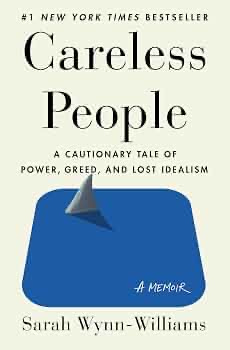
it's brave. beautifully written. it's relevant. and i believe her. and it must be legit because why else would Meta take unprecedented legal steps to silence her?!
we are kicking off our first FTL book club with Careless People. if you’re interested in joining, hop into our subscriber chat for more info.

as i was convincing Kevin to start reading immediately, we started talking about those of us who are reimagining their social contract and agreement with the workplace. no longer are the days to just get a job and be happy to be there. these hoes workplaces aren’t loyal. the future of work belongs to those who are clear on who they are, and the work they are truly called and designed to do and move with a different kind of authority and knowing. the ones whose career is going to look less like a straight line and more like a diversified portfolio of personal brand, consulting, entrepreneurship and the occasional residency inside a corporate workplace.
we’ve been noticing this pattern with those who first start as independent freelancers and pick up work and projects with incredible brands. and because they are amazingly talented people, they end up delivering incredible results and completely wow the teams they’re working with. of course then they get offers to come in-house. and btw, this is an incredible way to land a w-2 gig because you get to test drive company culture, see how the teams really operate and build super healthy boundaries from the start. the independence produces a natural authority of someone who’s operating with a strong self-leadership ethic and you are completely detached from the internal politics and immune to the usual workplace chaos.
but the transition moment back in-house is critical. because that natural authority that you carried as an outsider is at risk of eroding. if you are not clear and intentional, it’s easy to succumb to the corporate gravity and get sucked into the collective inertia of the office. while you absolutely must honor the people, the place and the practices, you cannot surrender your psychological sovereignty. while you are a w-2 employee again, you must refuse to come back under their authority. you must fight to keep your light bright. and you must remain a master of your craft.
here’s a story that explains why…
what does this even mean?!
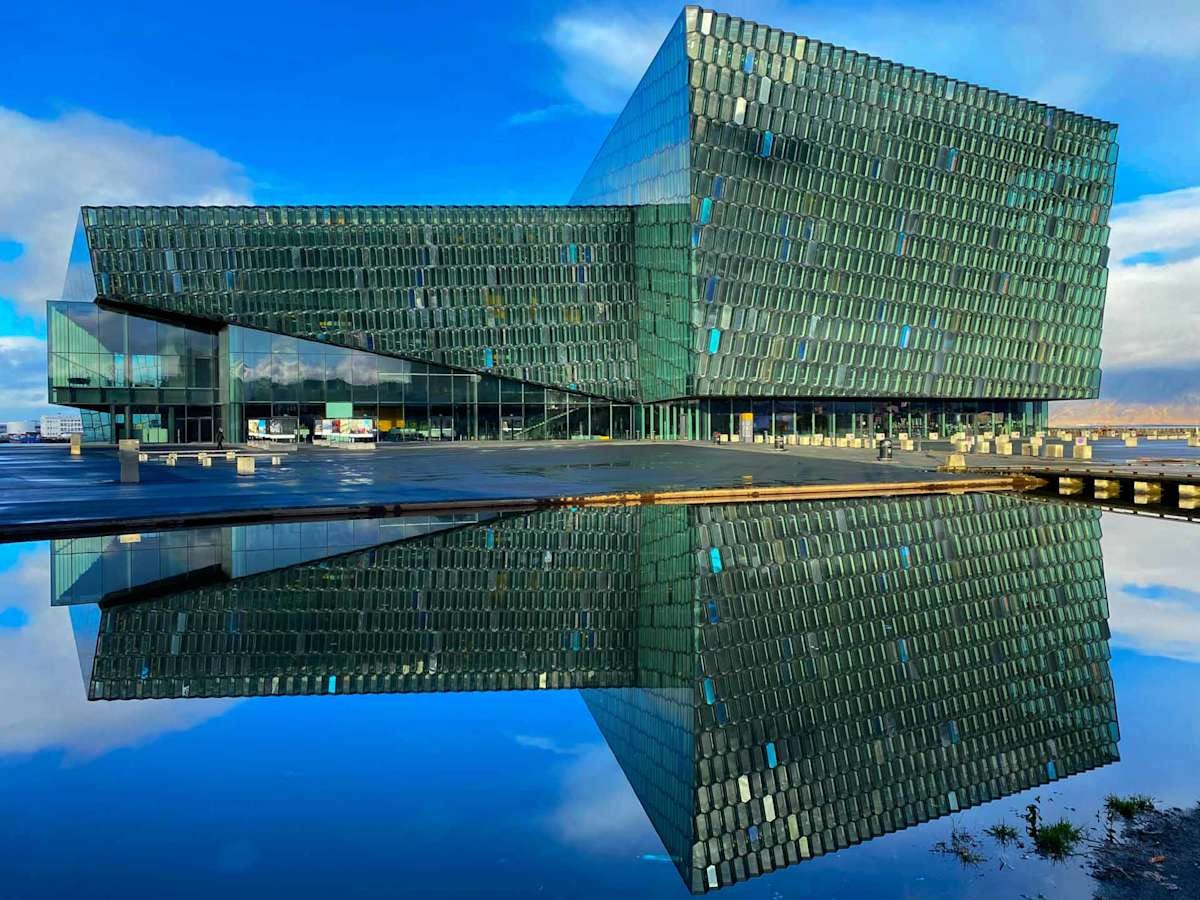
it was July 2019 and we were walking along the scenic waterfront path, making our way from our hotel to Harpa, the main concert hall and conference center that sits on the harborfront in Reykjavík, Iceland. Harpa is an architectural masterpiece. it’s dramatic, sculptural form and its iconic, jewel-like glass facade inspired by basalt rock columns was glistening and reflecting in the sun. the weather was a perfect combination of cool and crisp and the cold air felt refreshing on my face. i can’t believe i’m in Iceland, i thought as i walked with a crew of Netflix employees to our first set of meetings in the morning.
the occasion was our annual quarterly business review (qbr) where Netflix flew in their leadership team for 3 days, to go over the state of the business. normally these meetings were somewhere near the LA campus. but Reed had a long-held dream of bringing everybody to Iceland one day. i have no idea why Iceland, but i was so so grateful to be there.
as i was in line to grab breakfast, my phone started vibrating like crazy. as i pulled it out the pocket of my shiny black, puffy NorthFace, there were a stack of notifications from Slack and Google Chat. our editorial team had migrated onto Slack. but most of netflix was still on google chat.
holy sh*t, a brilliant creative woman on my team said in a slack dm. have you read the opening of the qbr memos?! Ted just said we’re the future of everything! what does this even mean?!
i have absolutely no idea what she’s talking about. i put my plate down and pull up my email to see that the July qbr memos have just dropped. these memos are sent to everyone across the entire company. it’s a way for Netflix to make good on their promise of keeping a transparent culture where all the information about everything is available to everyone all at once. VP’s of each department draft a summary of what happened in the last quarter, how they’re tracking against the broader strategic bets, and what they’re focused on for the next quarter. then the C-Level team pulls it all together and builds a cohesive narrative about where Netflix is. it usually opens with a letter from Reed (CEO at the time) or Ted (Chief Content Officer at the time). this one had an opening letter from Ted.
essentially it said that the work we were doing on the brand and editorial team – launching things like Strong Black Lead, Netflix Film and all our audience-focused editorial-first storytelling – was the future of all marketing and publicity. that the work he had done to build an in-house media and storytelling team – like Conde Nast meets Buzzfeed but built for Netflix – was working, having a big impact and should become the blueprint for how we storytell around Netflix in the future. he said it had implications for the product team, that soon we’d be booking Netflix talent on our own editorial formats and our dependence on external media hits like the Today Show or Hollywood Reporter would become less important because we would have our direct-to-consumer way to talk our audience and fandoms.
it was a stunning admission of the success of our efforts. when we took this direction in 2017, we were laughed at by the broader and more “serious” marcomm teams who didn’t understand what we were doing. if you’ve ever worked in social, you know how hard it’s been to gain the respect of your “traditional’ marketing peers. we were this rag tag team of misfits who believed we could build something meaningful and now Ted just said we were the future of everything. he encouraged all teams around the world to deeply understand who we were, how we were doing it and to find ways to collaborate with us.
hence, why my phone started blowing up from different people all over the organization who now wanted to set time with me.
i remember texting my well-intentioned manager. they were responsible for writing our section of the memos. did you all discuss this? did you tell him to write this? i asked, curious why i was just finding out about this monumental news at the same time as everyone else.
no, they said. Ted gave me a heads up yesterday that he was going to mention something about us. but i had no idea it would be to this extent. how do you feel about it? you should be thrilled.
i paused for a moment to really glean my true feelings. on one hand, it felt incredible to be seen and celebrated. a massive validation that our instincts were right. on the other hand, it just put a huge target on our backs. in saying our team was the future, he just rendered the rest of marketing irrelevant, single-handedly putting everyone else on the defensive. it’s also ironic because i was in the trenches fighting for more headcount and higher pay for a team that was already drowning.
i think it’s good news, i replied. i know the team is excited. i have no idea how we are about to handle all of this incoming, but we’ll figure it out back in LA. drinks to celebrate tonight?
i hear you, but…
a week later, back in LA, my assistant and i huddled to figure out how to navigate the sudden influx of interest. when Ted says something is a priority, the expectation is to move quickly and show results. and it felt like moths to a flame. we had received over 30+ meeting requests. managing that volume manually would take forever. i refused to add more pressure to our core team, who needed to stay focused on executing and scaling our editorial footprint.
i would build the updated pitch decks, outline our frameworks, and define the clear rules of engagement for how other teams could collaborate with us. but as we mapped out the math, it became clear that the individual roadshow and the inevitable follow-ups would take up multiple quarters of work.
in my next 1:1 with my well-intentioned manager, i knew we needed to come up with a strategy that could scale and i had an audacious idea. instead of meeting with everyone individually, what if we hosted the first-ever internal editorial summit?
for three days, we would lay out our entire ecosystem: our origins, the business case, and the initial experiments that proved the model. it would be an opportunity to feature each of our verticals, we had 9 or 10 at this point. every editorial lead would get the chance to present, giving them a high-visibility in front of important internal stakeholders. we would invite teams from around the world, livestream the sessions, and record everything. it would give us a permanent asset to direct people to, providing a library of foundational materials to distribute afterward. we had already checked: the big studio on Lot 8 was available in a few weeks on the dates we wanted.
my well-intentioned manager had always been incredibly kind, creative and supportive. they advocated for our work. but in that room, something felt off. all i remember was the feeling of hesitation and doubt and saying all the reasons why we shouldn’t do it. they raised concerns about the timeline, the sheer scale of pulling it off, and the risk of inconveniencing cross-functional partners by asking for so much of their time and not thinking it was a plausible idea.
i pushed back, citing how much of my own time would be cannibalized if we didn’t do it this way. if we were publicly deemed the future of the company, we shouldn’t be playing small or apologizing for taking up space. I empathized with my well-intentioned manager because i know over time after being at the company for so long, they had been slowly conditioned to play it safe, stay practical and keep the peace. but that’s not who i am or how i move.
so like most things during our time together, i told them, i hear you, but we’re moving forward. that was the beauty of the Netflix culture. i was empowered to make that call and disagree with my well-intentioned manager. that freedom is what turned us into a powerful player in the company in the first place.
that’s super weird
over the next few weeks, we hustled. we built out beautiful presentations, and held grueling rehearsals in studio 8. i felt like Matthew Knowles, demanding that our team of Beyonces run on the treadmill at full speed while singing. after they would practice presenting, i’d say, do it again. that transition was weak, or i don’t feel your conviction when you’re speaking. i don’t feel like you realllyyyy believe what you’re saying.
we needed to be flawless. we cut sizzle reels, built out surprises, walk on music…the works! when we sent out a comprehensive agenda of what to expect and a detailed run of show we received hundreds of rsvp’s, with notes saying, this looks exciting, can’t wait and things like, will be tuning in from Spain, Brazil, Japan.
the summit was a massive success. for three days, they laid out our mission, our why and the vision they had for their editorial outlets. where we could integrate with product, where we could collaborate with content and how we could work with publicity to get talent to do more exciting things. it was truly one of the greatest moments of my time at Netflix because of how they each shined. masters of their craft in full expression.
toward the end of the day on the last day, a brilliant creative man on my team asked, where is our well-intentioned manager? they haven’t been here any of the three days.
i hadn’t noticed until he mentioned it. i was so swept up in the moment, logistics and conversations with our cross-functional partners, that i hadn’t noticed that my well-intentioned manager hadn’t made an appearance at what was a landmark event for our team.
hmm, that’s odd, i told him. maybe they’re out of town.
he said, um, they’re not. they’ve been in their office this entire time in the other building.
wait, they’re here on the LA campus?! i said, confused. that’s really weird.
brilliant creative man on my team replied, yah, that’s SUPER weird.
“i feel competitive with you”
a few weeks later in early September, we were in Amsterdam at a global offsite for our org. we were staying at the swanky Soho House, and my well-intentioned manager asked us to go for an extended walking 1:1 along the canals. things were moving so quickly, that this was the first real quality time we were getting in weeks.
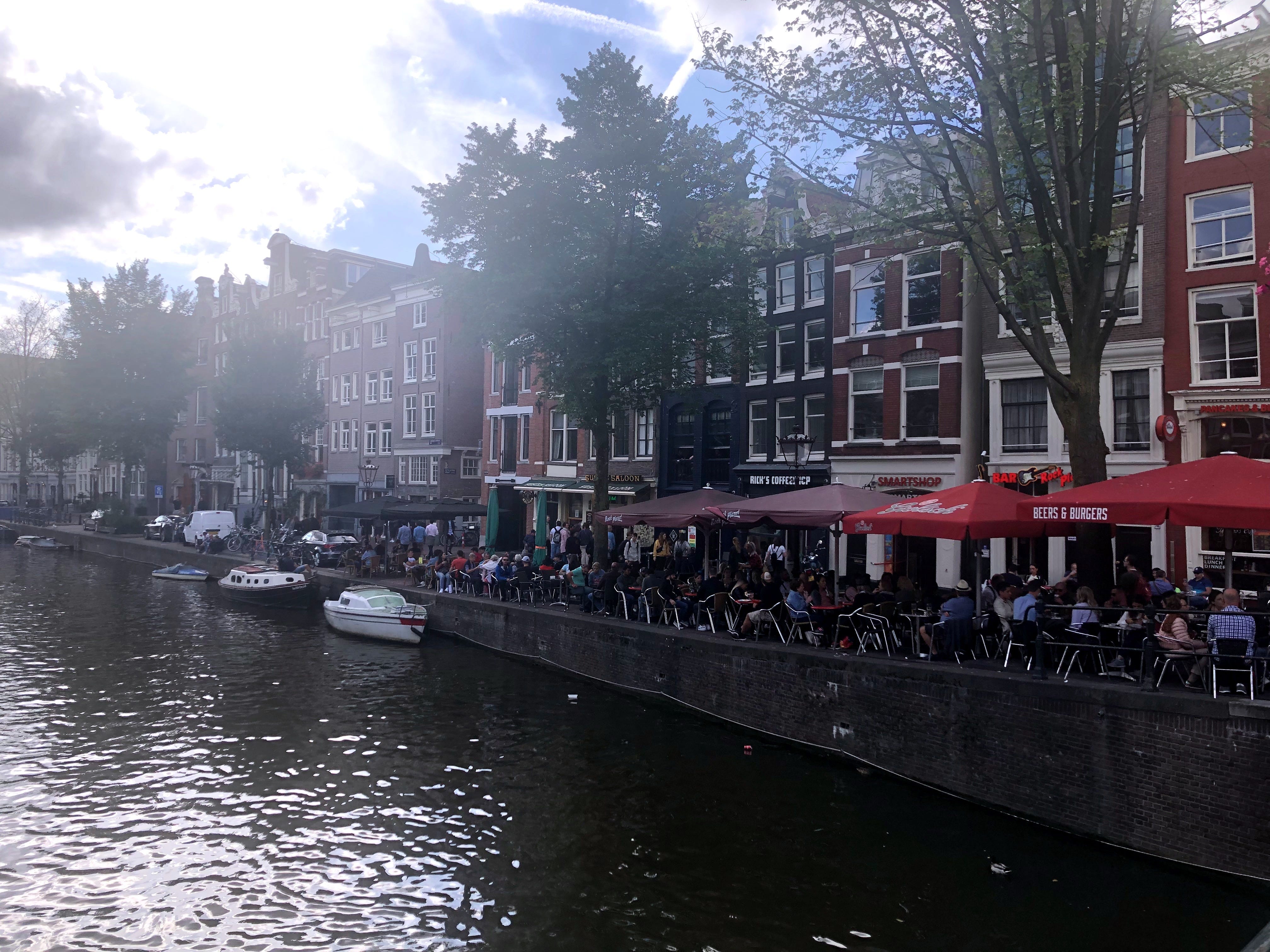
we grabbed coffee, a pastry and began to take in the gorgeous scenery. i could feel the tension starting to leave from my shoulders and felt a hint of relaxation coming through. they said, get me up to speed on everything i’ve missed, and i started to rolling through all of the updates on our conversations post summit. commitments that had been made, open tabs and interesting insights about what could be possible for us.
i felt an opening, and decided to pivot the conversation. i noticed you were absent at the summit. brilliant creative man on our team told me that you were in your office the whole time in the building across the street. is that true?
well-intentioned manager, said yeah. it is true. i couldn’t watch it.
i already knew it was true, but i still couldn’t believe it. i felt a massive wave of disappointment and sadness. and instantly had so many questions. why wouldn’t they want to come and see what we did? how we were advancing the mission of our team? to see and support our rag tag team of misfits shine so bright in front of hundreds of people from around the world? i didn’t understand.
and before i could speak, they continued, listen, Maya. you’ve been able to do things with this team that i’ve never been able to accomplish. it’s hard to watch sometimes how you’re able to bring all of this to life. and at times, i feel competitive with you. i’m not saying it’s right, but it’s the truth of how it feels watching someone like you crush it like this.
wow. it was like getting punched in the gut. i felt blindsided.
they hired me. i am a reflection of them. if i succeed, we succeed. what coach or leader wouldn’t want to support their star player? but corporate leadership isn’t the NBA, and my well-intentioned manager wasn’t Phil Jackson. they were just someone trapped in their own conditioning of a corporate ecosystem designed to breed scarcity, where people are subtly trained to view someone else’s brilliant light as a threat to their own survival.
I let out a soft, humorless laugh to keep the dam of my emotions from breaking through. well i guess that means you’re not advocating for me in rooms i’m not in or fighting for my promotion?
as we kept walking and talking, the picturesque Amsterdam backdrop suddenly felt dreary and dreadful. the tension in my shoulders hadn’t left after all. i immediately armored back up, letting the full weight of the blow land silently inside of me, and came to the profound, undeniable realization: i was officially on my own.
the limitations of the well-intentioned manager
the workplace is inherently designed to be dark. it’s in it’s roots. it was built into the very foundation and roots of corporate architecture. it’s an ecosystem that doesn’t want you to shine bright. in fact, it’s proactively trying to strip you of your light.
a well-intentioned manager is a leader who genuinely wants to be supportive, creative, and kind. but their leadership is ultimately capped by their own corporate conditioning. they will happily champion your work when it is small, safe. but the moment your output crosses into true brilliance (i.e. gaining high visibility, scaling rapidly, or outshining their own accomplishments) that supportive nature morphs into professional jealousy, self-preservation and fear.
do not, under any circumstance, mistake titles, hierarchy or tenure with real authority. workplace authority is make believe authority. if you allow yourself to be led by someone’s perceived power, there is a limit to what will be possible for you.
not everyone is going to have a culture like Netflix that empowers and encourages you to disagree with your well-intentioned manager. but you have to remember that your well-intentioned manager is just a person, who has insecurities, doubts and fears too. and it’s likely, because they are human, they will at some point express from their humanness (as will you).
so this is why it’s not good and not worth the time to please anyone. you can honor the institution and the norms of the culture without surrendering your personal authority or your light.
the truth is, you are not and will not be a permanent resident there. your job is not to get comfortable and appease the powers that be. your job is to come in and do the work that you have been called to do and the highest level of excellence you can do it.
because you can do all the things, like produce a world class summit and change the trajectory of marketing at Netflix, and it’s still not enough. the workplace will still try to dim you even though you are actively advancing their mission and their goals.
so, don’t wait for their permission to do your work. just do it. you are building a portfolio of the best work for your life, not for their comfort.
love them, but don’t follow them. and fight to stay bright.
sending u so much love,
m
another one! may this reach those that need to hear it most. I know the version of me that left corporate 3 years ago did.
OMG so, so, many thoughts. I did not expect your story to take that turn. Yet it is not surprising and something that far too many of us experience. Our bosses are indeed human. Because of my degree in counseling, I am a bit more keen on some of these insecurities. And many of them are a hot mess, like my last boss. But I had to draw a boundary, I wasnt hired to be her counselor. I could be supportive if she wanted to do and be better but that didn't turn out to be the case. So I wasnt about to take on a role that I was not hired for. Her personal problems were not my responsibility.