


In this special end-of-year edition of Currently, we’ve decided to spotlight a few of the leaders who impacted us the most in 2025. These aren’t just people we admire, they’re living proof of the conditions required to do great work in a world that often works against it. Each story reveals a different pattern we believe will move you forward: the power of self-mastery, the necessity of partnership, the courage to cultivate instead of complain, the quiet discipline of redirecting resources where systems won’t, and the intentionality required to build new spaces. As you reflect on your own year, we hope these stories remind you of what’s possible when you refuse to compromise, choose people who raise your belief, and stay aligned with who you’re becoming.
Currently…
… studying the art of Olivia Dean’s self-mastery.
Olivia Dean emerged as one of the most compelling creatives in music this year, with the release of her album The Art of Loving serving as both a commercial and artistic milestone. While it wasn’t a debut—she’d already released multiple EPs and a previous studio album—the project catapulted the British artist to stateside notoriety and became an introduction for many of us to the 26-year-old rising singer.
What I love most about the album’s success is how thoroughly it rejects the standard formula for pop stardom. In an era defined by maximalism and urgency, Dean leans into subtlety—allowing her voice, storytelling, and musical choices to breathe. Her songwriting favors clarity over cleverness, depth over drama, and sincerity over spectacle, resulting in music that approaches love with rare emotional intelligence. She refused the toxic, lust-driven, and insecurity-soaked narratives that dominate so much of the Hot 100 and instead made music for a more authentic, self-assured place. Her confidence in who she is allowed her to make an album with a clear point of view. “I would never write a song if it wasn’t something that actually happened to me,” she said in an interview with Nylon. “I do it for the feeling of the documentary-ness of it. I do it so that I can listen back to it in 10 years and be like, ‘OK, that was about that time in my life.’ That’s interesting to me.”
Olivia is also clear on her process and understanding the environment necessary for her to create her best work. While recording the album she moved into a grand house in East London and transformed it into the live-work studio of her dreams for eight weeks. She filled the place with instruments from home, plants, flowers, and her favorite books – including one of the album’s big influences, bell hooks’ classic All About Love.
For creatives, there’s a lot that can be learned from the way Olivia’s clear vision and security in her taste resulted in art so sincere the masses can’t help but connect to it. The album still hit every major commercial benchmark despite prioritizing potency over popularity: viral moments across TikTok and Instagram, breathtaking live performance videos everywhere from COLORS to Saturday Night Live, interviews with nearly every major media outlet, a coveted Best New Artist Grammy nomination, and a sold-out tour. And throughout it all, Dean hasn’t let success get to her head, aligning always more as an artist than a celebrity. She’s remained grounded, grateful, and deeply aligned with her fans—most notably demonstrated by her successful push to get Ticketmaster to secure refunds for fans who paid above face value for tickets to her upcoming tour and agree to cap all future ticket resale prices at face value.
Olivia Dean reflects a creative who understands the audience she’s leading and trusts her instincts over industry metrics. By not caving to conformity, she’s carved out a lane entirely her own—one that feels both intentional and deservingly fast-tracked to success. May that be a lesson we all take into the new year. – Sylvia Obell
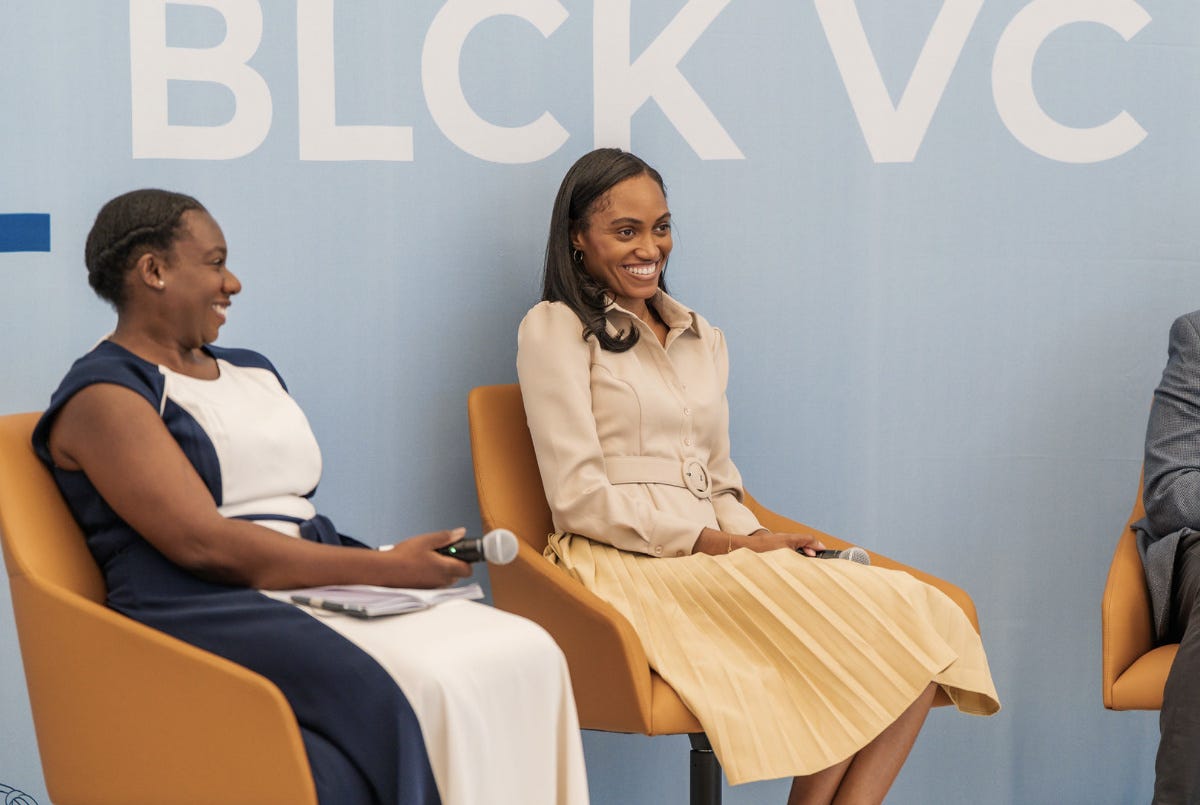
…paying attention to Jewel Burks Solomon doing the kind of work our economy cannot afford to lose.
In a year marked by a concerted backlash against DEI initiatives and tightening capital markets, access to funding for Black founders has become even more constrained. More than 300,000 Black women have lost their jobs in the last year, pushing many toward entrepreneurship as a means of survival and stability. But Black founders, broadly counted, receive less than 0.5% of total U.S. venture capital dollars. That razor-thin slice of capital makes the existence and direction of Jewel’s Collab Capital firm all the more consequential.
As co-founder, Jewel isn’t just writing checks — she’s redirecting leverage. With more than $125 million in assets under management and a freshly raised second fund of $75 million this June, Collab isn’t playing at the margins. The firm makes meaningful check sizes — often $1–2 million — to fuel founders’ dreams with real runway and real intent behind them. The work she’s doing isn’t just important – it’s the kind of leadership that’s vital to the survival of our economy.
What distinguishes Jewel’s leadership is how she sees the work. Her philosophy — “fall in love with the problem you’re trying to solve, not just the answer” — shifts the focus away from short-term market whims and toward the underlying conditions that have historically shut founders of color out of capital flows. She’s strategically deploying capital into the future of work, economic mobility, community infrastructure, and care economies — areas that are often dismissed as “soft,” yet are foundational to shared prosperity. In an industry obsessed with speed, notoriety, and extraction, Collab’s approach is disciplined, patient, and deeply intentional.
What makes this moment especially compelling is how quietly she’s building influence. No loud self-promotion. No spectacle. Just results — real funding reaching real founders whose businesses and communities stand to benefit directly. Most people may never know her name, but many will feel the impact of her decisions — through the companies that survive, the jobs that are created, and the economic opportunities that get unlocked because someone made sure the money reached the right hands. - Maya Watson
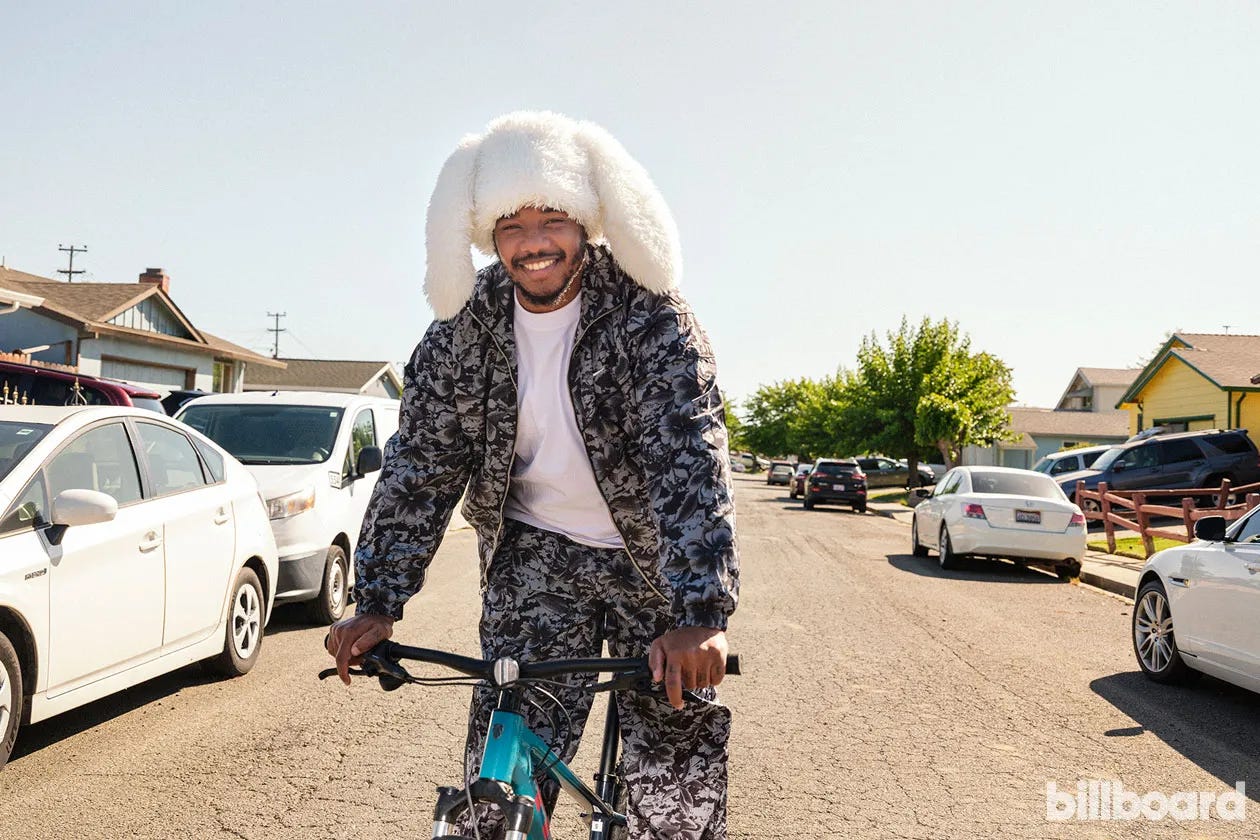
...choosing to follow LaRussell’s Law of 100.
Chance the Rapper made being an independent artist cool. And Bay area artist LaRussell is turning it into a movement. I was first put on to him last year when Maya made me watch his appearance on TinyDesk. His energy jumped off the screen - immediately relatable, easy to root for. And this year, he kept giving us reasons to keep watching. One memorable clip was what I’m calling LaRussell’s Law of 100.
“If you start a podcast and sit down and do 100 episodes, your life will be different than when you were at 0. You sit down writing and make 100 songs, your life will be different than when you were at 0. 100 pieces of content…go do 100 of something before you start complaining.” It made so much sense in this era of consuming more than we create and is exactly the kind of cultivation ethic that’s required going into 2026. We have to get back to process, to practice, to the love of inputs over outcomes. LaRussell’s gift of cultivating is paying off big and not just for himself.
This year, he released seven albums and offered fans not only intimate access to his backyard style shows, but equity in the sale of his music and documentary projects. Who else do you know that’s allowing fans, who spend so much on their favorite artists, to also experience the upside of their investment? LaRussell is leading the way and representing what we expect to see more of in a time where trust in systems is declining and people are turning inward. He is doubling down on building a community based on depth and not breadth. Proof of this? After a fan who attended one of his backyard events became the head of marketing at the San Francisco Giants, they tapped LaRussell to record an anthem for the team. Now that’s what you call Good Compenny. - Kevin Stuckey
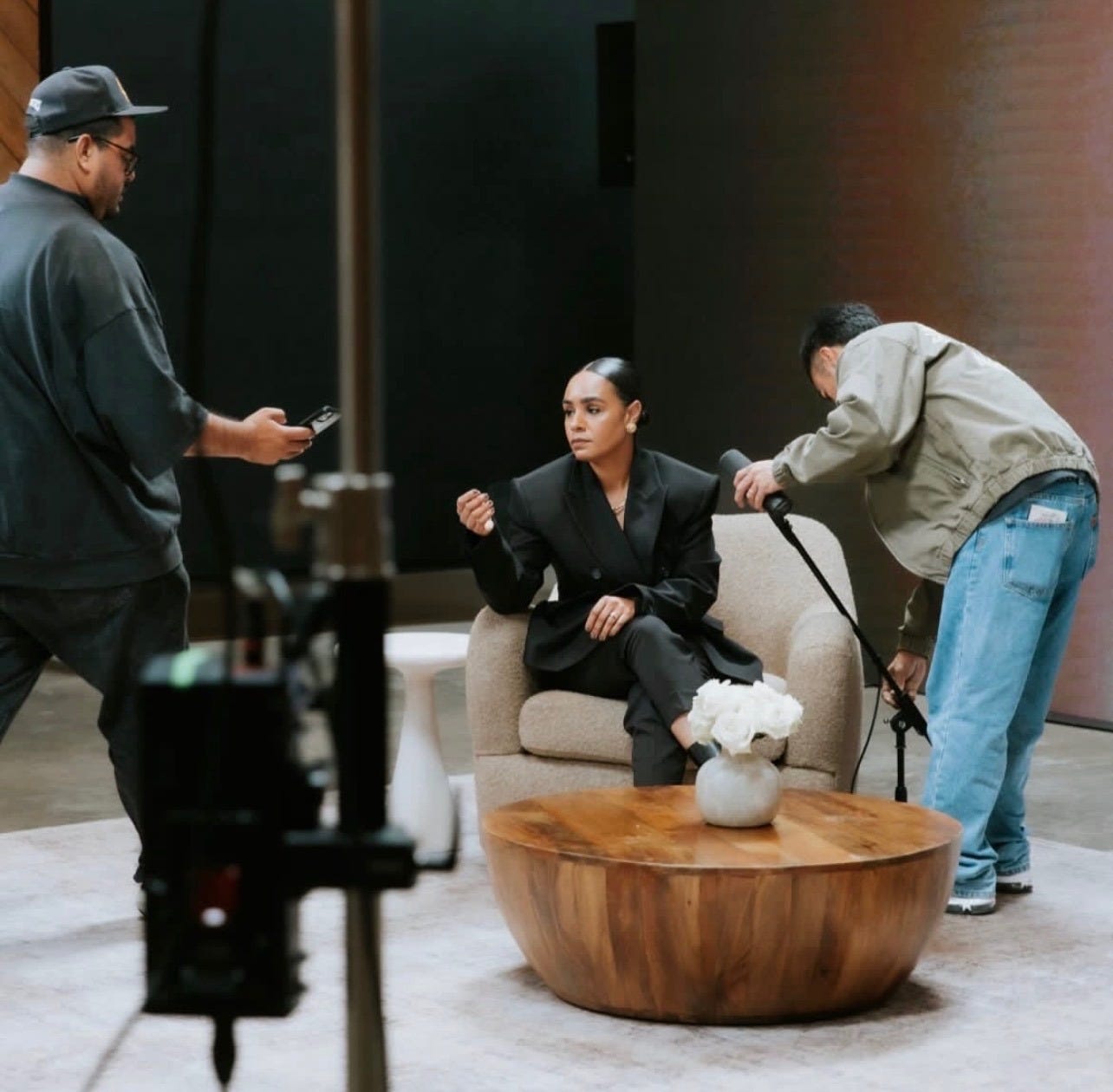
…watching Natalie Manuel Lee build one of the most important sanctuaries in culture.
In a year where everyone seems to be searching for something — meaning, grounding, faith, truth, relief — Natalie has been steadily constructing an arena where those questions are allowed to breathe. Now With Natalie isn’t trying to be flashy or force relevance. It’s doing something far rarer: creating a beautiful, intentional space where faith and culture are allowed to coexist without dilution, performance, or fear.
What stands out most about Natalie’s work isn’t just who she brings into the room, though the consistency and caliber of her guests are undeniable – from an exclusive conversation with Sarah Jakes Roberts (arguably the most influential woman in modern Christianity) to Essence Atkins speaking with striking clarity and conviction (my personal favorite this year) – but the way she curates conversations that feel grounded, reverent, and alive. The aesthetic is thoughtful. The tone is calm. The intention is clear.
As someone who is actively growing in my own faith — and fighting to stay in integrity in a world that wants you to drift — her space has become a refuge for me. Not a place of answers, but a place where belief is explored honestly, with depth, humility, and care. That matters more than ever right now. And in that way, she is quietly becoming an answer to something I realized many of us creatives need right now. There’s something profound unfolding here. And if the depth, care, and integrity she’s shown this year are any indication, this is only the beginning. - MW
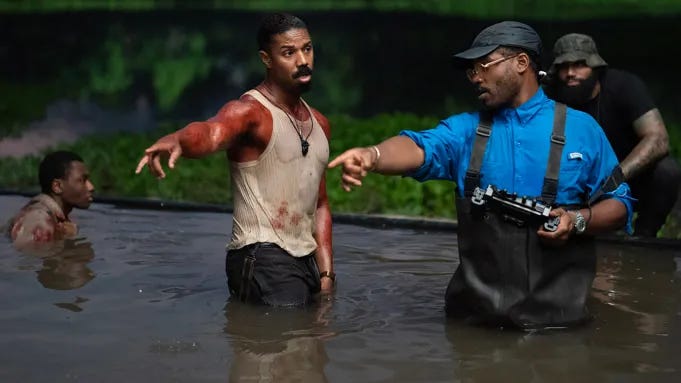
...celebrating Ryan Coogler for proving the biggest sin is becoming great alone.
It’s been over a decade since Ryan Coogler made his directorial debut with his Sundance award-winning film Fruitvale Station starring Michael B. Jordan. This year, his fifth film Sinners became the highest-grossing film of the year with an original screenplay. In a time where studios are playing it safe and betting on existing IP, Ryan bet on himself and brokered a one-of-a-kind deal: full creative control with final cut, immediate box office revenue shares starting when the first dollar is made, and ownership of the film’s rights reverting back to him after 25 years. It’s unheard of—a significant move for creative freedom and Black ownership, themes woven throughout the film itself.
But what’s been even more powerful to watch is how his brotherhood and creative partnership with Michael B. Jordan has grown alongside their collective commercial and critical acclaim. Coogler tapped Jordan to star in his next movie Creed, a spinoff of the infamous Rocky films, and went on to become its own three-film franchise. All of which starred Jordan. Next, he chose Jordan to play opposite Chadwick Boseman in Black Panther, which became the highest-grossing solo superhero film ever, and the first and only Marvel film to receive a Best Picture nomination. And now, the success of Sinners has the duo leading the major Hollywood award cycles for 2025-2026.
It’s refreshing to see a bond like this that continues to yield success. Although Ryan and Jordan aren’t related, it feels like family business—a dynamic we see in collaborations like Spike Lee and Denzel Washington or Ava DuVernay and David Oyelowo, who just announced their third film together. In an industry designed to make Black creatives feel like there can only be one, where you’re not expected to walk through the door with anyone else, they keep showing up together. These kinds of partnerships are a reminder that no one becomes great alone. That in collaboration, we are challenged, sharpened, and celebrated. Our greatness grows through relationships and when faced with hardship, it’s partnership that helps us endure. As Coogler stated in a tribute to Michael at the 39th annual American Cinematheque Awards: “I’ll be forever grateful with him that he shares his truth with me and my projects, that he shares his truth with the audience: that we all are human and that even the brightest stars start from the ground up…So i just wanna say thank you bro for always trusting me.” That’s not just pleasantry. That’s the fruit of collaboration and the kind of honoring each other that’s required to do our best work. And we need more of it. - KS