


A year ago yesterday, former Vice President Kamala Harris lost her bid for President of the United States. She, and by extension her campaign, embodied so many of us — the ones who’ve spent our lives showing up for others, collecting titles, acquiring accolades, being twice as good, living a life dedicated to service while rarely being celebrated for the work we do.
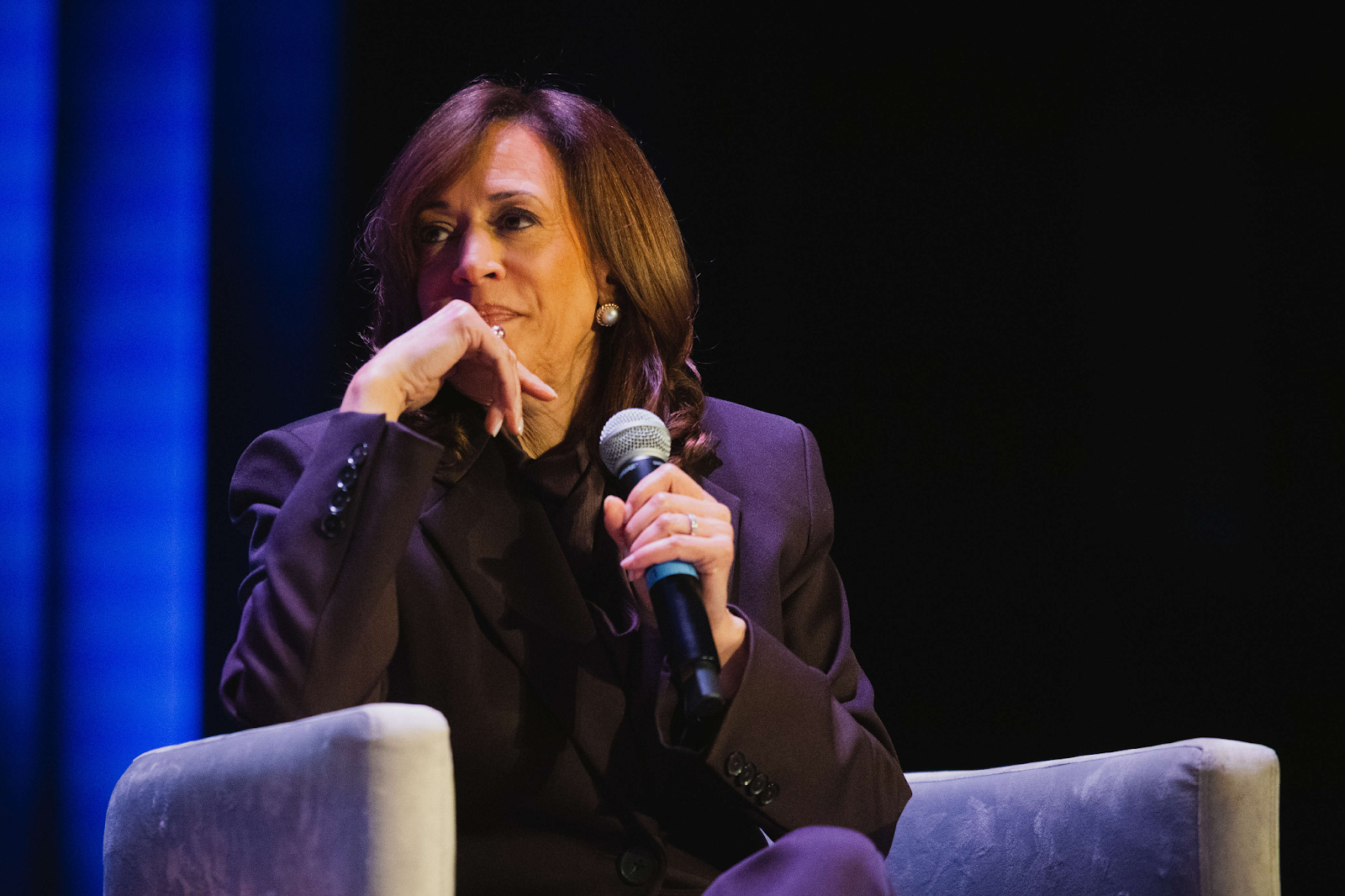
In those weeks leading up to the election, there were prayer calls, Zooms meetings, and group texts filled with hope. We weren’t just rooting for her — we were rooting for ourselves. I remember thinking, we’re going to have to brace for impact if she loses. Because so much of our collective hope was tied to her winning. America’s rejection of her would feel like a rejection of us all.
So on November 6, 2024 at 2 am, when we all woke up at the same time in the middle of the night, only to discover that she had lost, her defeat wasn’t just political. It was deeply, deeply personal.
In fact, for many, especially Black women, it was the last straw. The quiet “I’m done,“ or the very public, “y’all got it.” The disbelief that after doing everything right, after playing by every rule, after giving everything we had, everything she had, the outcome still didn’t go our way. Disappointment doesn’t even begin to describe the feeling.
We lost a lot of hope that day.
The Seduction of Results
For as long as I can remember, my life has revolved around outcomes.
If I study hard, I’ll get a good grade.
If I get good grades, I’ll get into a good school.
If I get into a good school, I’ll get a good job.
If I get a good job, I’ll make money, gain recognition, and live well.
If I make money and gain recognition, I’ll be successful.
If I’m successful, I’ll be happy.
And for a while it worked, because I kept getting what I wanted, until I didn’t.
Like when I got the CMO title for the first time. I thought it would make me feel accomplished, like I finally made it to the top. But I felt emptier than ever before. When I got married, I thought we would be the ones to go the distance, to live happily ever after, but it fell apart despite my best efforts to do everything I could. When I left corporate life to go on the entrepreneurial journey, one that I’m certain God led me into, I built the business, raised seven figures — one of the few Black women to do it — but it still “failed.” This July, I had to shut it down. It broke my heart. Not too long after, while talking about my next project with friends, I blurted out, almost without thinking, “It better happen for me this time. I need a win. If this one doesn’t work, I won’t survive it. I can’t go through this again. I can’t believe this big again and get my heart broken.“
But as soon as I said it, I recognized how dangerous it was to be that dependent on any outcome when one of life’s biggest lessons is that nothing is guaranteed.
When Hope Depends on Results
The danger of outcome-based hope says, “If this happens, then…”
I’ll only believe if I know I’ll get the result I want.
I’ll feel safe if this thing happens.
I will finally rest when I see this thing come to pass.
We’ve been trained to think this way our whole lives. And it’s why so many of us keep cycling through the devastation of disappointment –the gap between what we expected and what we experienced. It’s the breeding ground for unbelief.
The heartbreak after Kamala’s loss wasn’t just rooted in her defeat, it was also about the hope inside us that died that day. The doubt it produced in us. The pain of wondering if it will ever be enough. Even though we’ve known the uphill battle for respect, visibility and access, the reality set in that maybe we’re really not wanted here. Maybe all the work wasn’t worth it. Maybe there’s nothing we can ever do to be good enough.
Over the last year, we’ve seen our community be incredibly critical of each other. There’s a shortness and an edge that wasn’t there before. I know first-hand because I have found myself in the middle of the discourse around the disappointment experienced at Essence Fest and other cultural tentpole events. We’ve seen founders brace for impact as they announce new roles, leaders in our community feel pressured to give disclaimers before their events, entrepreneurs nervous to announce new endeavors, all because the distress in our community has (understandably) reached such an insatiable level that nothing feels good enough.
I believe we are witnessing the collective cry of broken hearts and unprocessed disappointment. Life isn’t turning out the way we thought it would. Things aren’t happening in the time we’d hoped for. And it sucks.
Outcome-based hope ties peace to performance. It shifts waiting into withholding. You start holding back your joy, your generosity, your faith until you see results. And when those results don’t come, that hope decays into cynicism, bitterness, and unbelief. Delays feel like indictments. Other people’s wins feel like losses for you.
I saw it in myself too. I was still showing up, still building what God told me to build, but I was more critical than I’d ever been. Less compassionate. More defensive. Outcomes are sand, they are temporary, shifting, never meant to bear the weight of our hope.
Assignment-Based Hope
Assignment-based hope starts differently.
It doesn’t start with “if this happens.”
It starts with “this is why I’m here, regardless of what happens.”
Your assignment is the work you were uniquely created, designed, and called to do — the thing you’re called to steward, whether or not you ever see the result you imagine.
Everyone starts with belief and hope in something. When Kamala got the nomination we hoped we could get it done in 107 days. Historic on so many fronts. That belief produces works. We organized, fundraised, and got in formation. It looked like it was going to happen.
When disappointment hits, like it did on that day, we have two options:
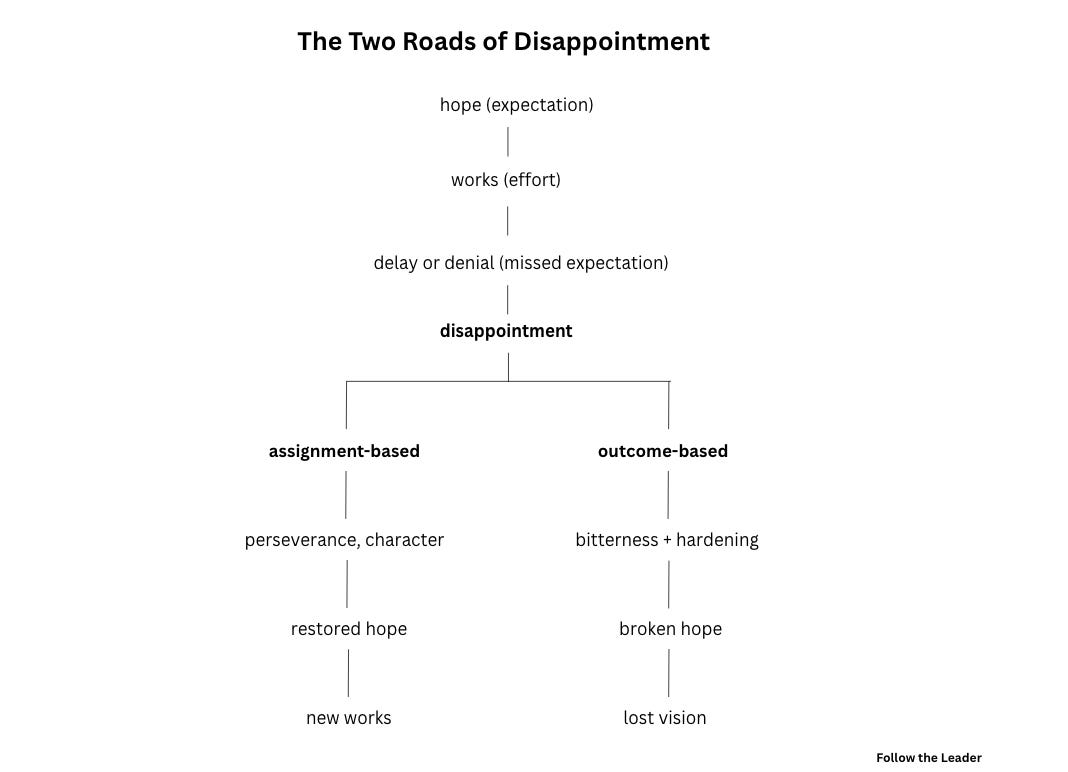
Outcome-based processing
The disappointment gets stored. You internalize the heartbreak, the exhaustion, the disbelief, and your heart starts to harden. It begins quietly, as bitterness — the subtle belief that life, or people owe you something back for what you gave. You replay the betrayal, keep score and make private vows never to trust that deeply again.
The other, more powerful, redeeming option is:
Assignment-based processing
You don’t suppress it or spiritualize it away; you let it speak and you let yourself break. You name what hurts instead of pretending it doesn’t. You tell the truth about your expectations, about what you were hoping for. You forgive, not just others who may have let you down, but the version of yourself who attached your worth to results.
When you run your disappointment through that process, the moment itself becomes training. It builds perseverance, the ability to keep going when you can’t see the finish line. It builds endurance, a steady heart and begins to produce the living, breathing, battle-tested hope that can’t be shaken by results that we’ll need as we continue to become the people we were created to be.
Mastering How We Hope
A year later, it is encouraging to see people like Zohran Mamdani in NYC and Mary Sheffield in Detroit who used the pain to become the answer to problems they believe need to be solved. Their unwavering commitment to their assignment is producing the good kind of hope we need. And it’s been equally as inspiring to see the residents of their cities, along with those in New Jersey, Virginia, California, channel their disappointment into fuel by taking action at the polls and showing up in record numbers that far exceed the averages for local elections.
I’ve seen so many people express that this year’s Election Day results have reignited hope for the first time since last year’s and that they are hope-scrolling again. And it’s a good feeling. Hold on to that as long as you can. But also ask yourself: Are you waiting on major victories and/or someone else to prove hope still works, or are you becoming the evidence yourself?
When I operate in my assignment, I feel steadier, more immovable. I am the consistent stream of hope in who I’m becoming. I am the unshakable evidence. And maybe that’s what this last year since Kamala’s loss has been trying to teach us — that the goal isn’t to get what we hoped for, but to become the kind of people who can hold hope no matter what happens. Hope isn’t a mood, it’s a muscle. And every delay, every loss, every unmet expectation is resistance training for it.
A year later, my prayer for Kamala is that she’s been in the gym too — resting, reflecting, and rebuilding the muscle that loss tried to tear. That she’s giving herself the space to feel the pain, lift it slowly, and let it strengthen her for what’s next.
Because that’s what real hope does.
It doesn’t just recover — it comes back stronger.
sending you so much love,
m
Great Read!
Very well written Maya. Couldn't agree more.